The world’s first tubeless CPAP machine
How it works.
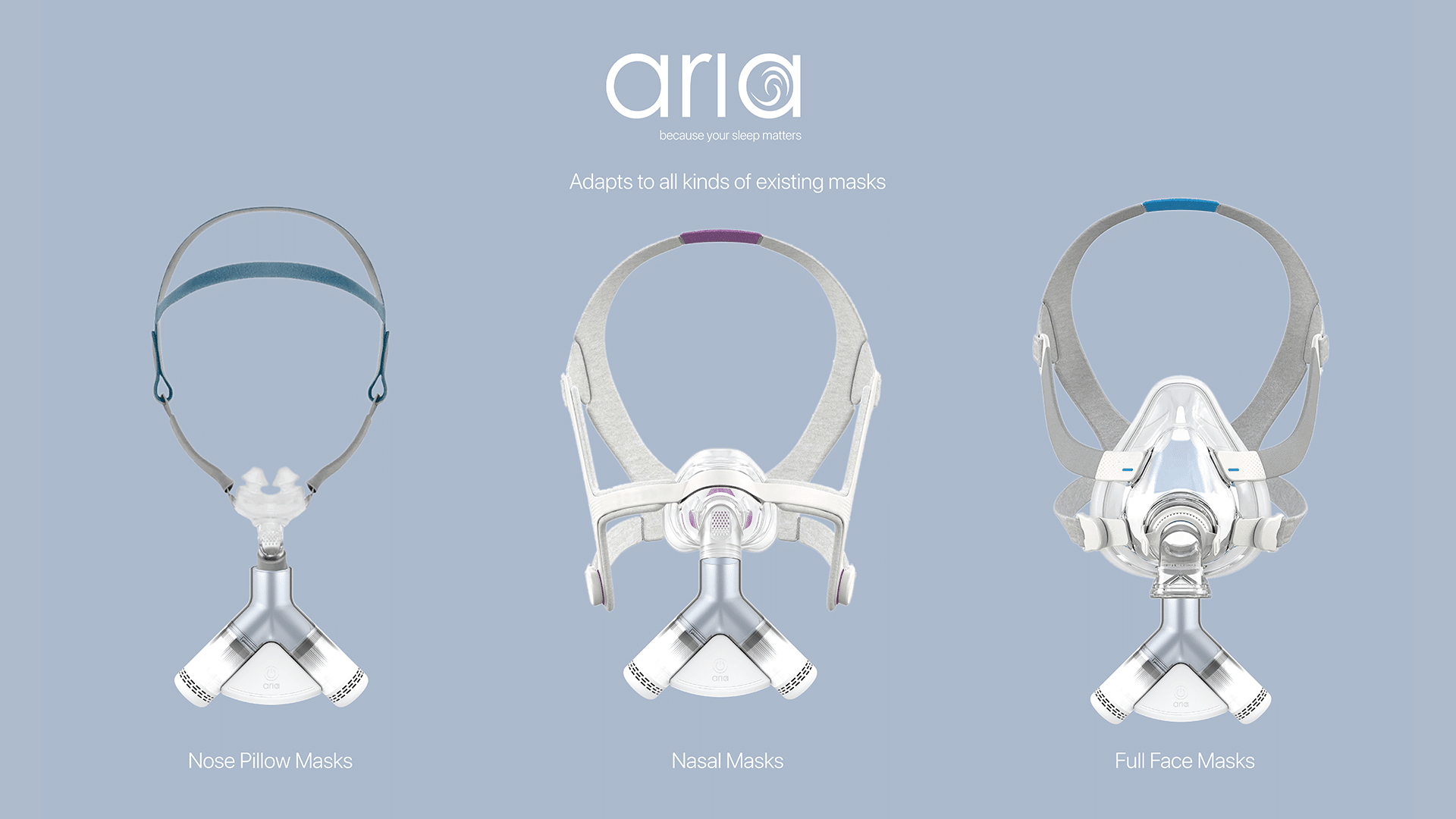
Aria packs the entire CPAP system into a single device that attaches to the mask. It works with two Dyson V9 motors in a Y shape, positioned downwards as far from the ears as possible, operating at 40% power for quieter performance. If the patient turns and one motor gets obstructed, the other compensates by spooling up. A central removable battery powers the motors. It includes a discreet row of lights to show the charge status. The pins that connect the battery to the motors also function as chargers, through a specialised stand. The plug-and-play nature of the batteries allow patients to travel with Aria by packing a few batteries, something unimaginable with current CPAPs. Designed for easy disassembly, Aria facilitates straightforward cleaning and repair. The most common upkeep is replacing the filters, which is easily done by removing a small cap. Additionally, Aria seamlessly connects with all existing masks (nasal pillow, nasal, and full-face masks).
Design process.
The design process of Aria was carried out in four parts. After deciding to tackle this challenging issue, we studied the condition and current solutions thoroughly. We interviewed CPAP experts and users at the Hospital Clínic, our partners in the development of this project. We tested current CPAPs to fully understand the pain points and set a number of goals for our design. This step was key to understanding we needed two motors, for instance. After that, we mocked up the maxiumum general volume it could have, and started placing the various elements. The Y shape for the motors came quite naturally, but placing the battery was quite a bit harder. External options such as armbands were developed, but scrapped in favour of a battery straddling the two motor tubes. This also allowed us to power the two motors from a central element, simplifying the design a lot. This solution also makes taking the mask on and off easier. Once we had the design finalised, we printed it out, added weights to simulate the real motors and tested it. The test involved having non-CPAP users use a regular CPAP one day and ours the next day, or viceversa. All ten testers concurred that Aria is a far more comfortable experience. The added weight on the face is not a big issue as the head is supported at all times against the pillow.
How it is different.
Aria is radically different from all other CPAP machines currently available. All current machines are clunky bedside boxes that connect to the patient through a tube and a mask. This limits freedom when sleeping – you are forced to sleep on your back or side and can’t turn around in bed -. By removing the tube, Aria gives the patient the full freedom, as if they weren’t wearing a CPAP. Because it is a battery-powered design, it is also more resilient to power outages, adapts better to developing countries. Multiple battery packs allow patients to use their CPAP in multi-day activities in nature such as camping. Aria is also much lighter and smaller than existing designs, which contributes to empowering users to live their most normal life.