Walk through any city center today, from Tokyo to Barcelona, from New York to Mumbai. The same storefronts, the same logos, the same shoes. Nike swooshes and Adidas stripes have colonized our streets with a uniformity that would have been unimaginable to our grandparents.
Yet beneath these identical shoes lie 8 billion unique feet. Different widths, different arches, different gaits, different needs. We’ve accepted a peculiar trade-off: individual discomfort for collective efficiency. But what did we lose in this exchange?
A century ago, footwear told stories, but more importantly, they were created for specific climates and foot shapes adapted to local populations. Ethnographic research shows how traditional shoes evolved to serve their environments, even if some were deliberately uncomfortable for special cultural practices. Each shoe was a solution to a specific problem, crafted from local materials, adapted to local anatomical and environmental needs.
The story of this project begins with me as a French student discovering Barcelona, where centuries-old techniques coexist with cutting-edge design schools. At IAAC, with its FabLab and experimental approach, surrounded by a neighborhood where old industrial buildings are being rehabilitated into creative spaces, the contradiction became impossible to ignore.
Poblenou embodies this tension perfectly. A district where rehabilitated industrial buildings house both traditional workshops and innovation labs. Where remnants of Barcelona’s industrial past serve as foundations for its creative future. Where tradition and innovation don’t just coexist, they collaborate.
Throughout the year, discovering different projects at school and in the FabLab, meeting various workshops in the district, a question became central: why does innovation so often mean replacement rather than enhancement? Many people have already answered or are working on this question, it’s a subject that fascinates me. With my scientific background, I had always approached innovation as creating or replacing things, but with my growing sensitivity and what I learned this year, this question became something very important to me.
“8 billion unique feet forced into identical shoes. As a French student in Barcelona, I discovered the tension between tradition and innovation in Poblenou district, questioning why advancement must mean replacement rather than enhancement.”


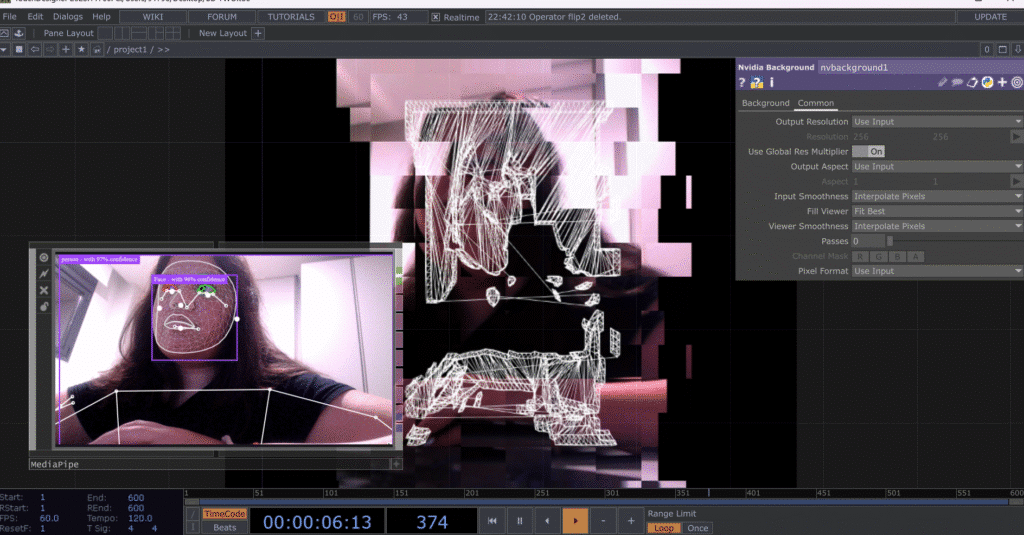
The first breakthrough came through understanding the problem quantitatively. Using 3D scanning technology, the research revealed what podiatrists have long known: the “average foot” that mass production targets doesn’t exist. Additionally, foot science practiced by podiatrists has evolved little over the years because it remains highly subjective to each doctor. Data isn’t commonly collected and analyzed, treatments vary widely, making it difficult to obtain reliable data. With the arrival of 3D technology, changes have occurred. For example, 3D printed insoles that are more precise and therefore easier to analyze for improvements.
Each scan told a unique story. Some feet had high arches requiring specific support. Others had wider toe boxes that standard shoes compressed painfully. The data was clear: forcing individual anatomy into standardized forms wasn’t just uncomfortable, it was potentially harmful.
From this understanding emerged a software solution that could translate individual foot geometry into personalized shoe lasts. But more importantly, the software allowed users to modify the last shape themselves, enabling people to create something most comfortable for them. This would allow for perfect 3D printing of their personal last and therefore the possibility to create shoes adapted to themselves.
The technology became a bridge, not replacing human skill, but amplifying human capability. Digital precision serving artisanal wisdom. This approach echoes how 3D printers were created to help humans make new things and sometimes create machines that allow people to build their own tools, much like those used in ancient times.
With the technological foundation established, the next step was finding the right craft tradition to enhance. The choice of espadrilles wasn’t arbitrary. These humble shoes, born in the Pyrenees and perfected across the Mediterranean, embodied everything mass production had forgotten: local materials, cultural significance, environmental harmony, and remarkable durability in dry environments, as the materials aren’t necessarily adapted for use with water.
Hemp rope, cotton canvas, jute soles are materials that grow within kilometers of where the shoes are made. No global supply chains, no synthetic compounds, no planned obsolescence. Just intelligent use of local resources. The use of this plant to create shoes is also amusing, as this plant produces material that isn’t authorized for consumption everywhere in the world, though this resource is authorized to smoke in Barcelona.
Learning these traditional techniques should have meant sitting with artisans whose hands held decades of knowledge. This is perhaps what I should have done, but with the language barrier and the scarcity of these artisans in the city, I had difficulty finding them and had to learn by myself with everything I could find on the internet.
I acquired this knowledge during three full days I spent hand-braiding, trying to find the perfect technique with the tools I had. Although this was complicated and slow at first, a certain rhythm and sense of rest settled in. Every gesture had purpose through this personal discovery. The way rope was coiled, how canvas was stretched, the rhythm of hand-stitching. Each element optimized through trial and personal iteration.
However, the reality of espadrille production revealed an interesting landscape. Machines for braiding espadrille soles already exist, some in Catalonia dating back over 100 years, very old and very large. Others exist in Bangladesh, where jute cultivation has led to espadrille production for global export in recent years.
But these existing solutions served mass production, not personalized creation. Since I wanted shoes to be more personalized rather than standardized, made with local products, and enabling people to make them themselves, I wanted to create a machine that would allow braiding one’s own espadrilles.
This took me 2 weeks to develop. Even though it’s not perfect at the moment, I probably need to learn from all my mistakes to try to make another one that adapts better, perhaps simpler and one that truly imitates the real gesture of braiding.
The goal wasn’t just mechanical efficiency but accessibility and authenticity. A machine that could democratize the traditional technique while preserving its essential character, allowing individuals to engage directly with the craft rather than merely consuming its products.
3D scanning reveals the myth of the “average foot.” Traditional espadrille techniques learned through three days of self-taught braiding. Creating a personal machine to democratize craft while preserving authenticity.


The complete process emerged as a symphony of old and new. 3D scanning to understand individual foot geometry. Software generation of personalized lasts. Machine braiding that preserved traditional quality. Hand assembly that honored artisanal skill.
Each step maintained human agency. Technology provided capabilities, but decisions remained with makers and wearers. Personalization without dehumanization.
The braiding machine in development aims to become a meditation on appropriate technology, sophisticated enough to maintain quality, simple enough to understand and repair, efficient enough to be economically viable. However, it’s important to note that this machine is not yet fully finalized and remains a work in progress toward these goals.
The final assembly remained entirely manual. Machines could enhance efficiency, but the soul of craftsmanship (the judgment, the adaptation, the care) required human hands.
Testing the prototypes revealed insights that went beyond technical specifications. Users didn’t just evaluate functionality; they engaged with the process of creation itself, discovering personal preferences in braiding patterns and sole construction.
The experience of making one’s own espadrille sole created an emotional connection to the final product. Participants reported a sense of ownership and understanding that mass-produced footwear had never provided.
More importantly, each testing session became a collaborative learning experience. Different users brought different needs, different techniques, different innovations, proving that democratizing the tools of production also democratizes innovation.
Hybrid process combining 3D scanning, software generation, machine braiding and hand assembly. User testing reveals emotional connections beyond comfort, people feel ownership of their self-made creations.

This project intentionally embraces several key design methodologies that extend far beyond footwear. Distributed design allows production to happen closer to where products are needed, reducing transportation and enabling local adaptation. In this context, it means that espadrille-making knowledge and tools can be shared globally while being adapted to local materials, climates, and foot shapes.
The open-source design approach ensures that innovations, machine designs, and techniques remain accessible rather than proprietary. This project doesn’t aim to create a final product for every corner of the world, but to help adapt this knowledge for all parts of the world using their own materials and knowledge to create alternatives to conventional footwear.
Sustainable design principles guide every decision, from material selection to production methods to end-of-life considerations. Local production, natural materials, durable construction, and repairable design create a complete inversion of fast fashion’s extractive model.
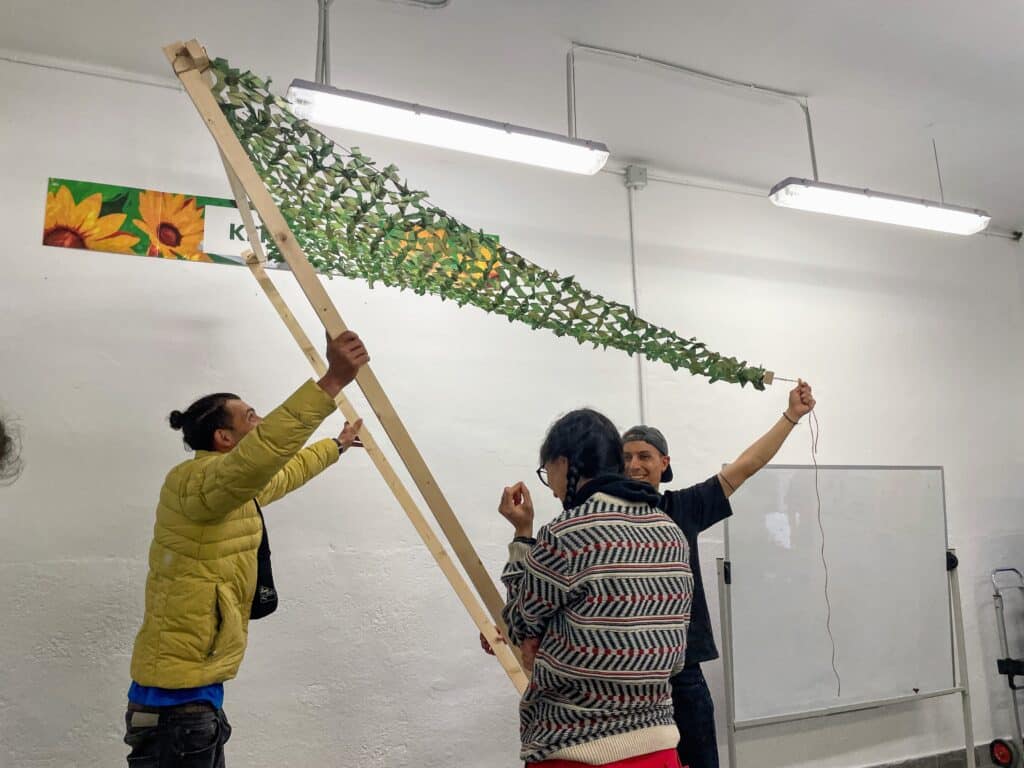
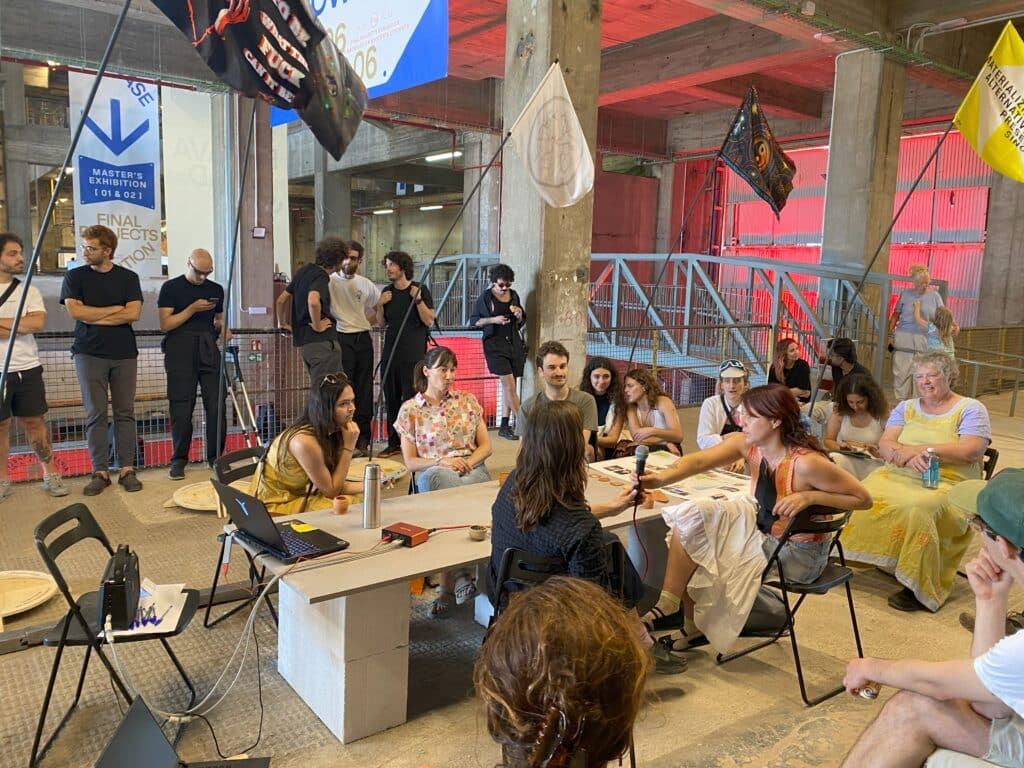
The workshop experience becomes central to this vision, functioning as laboratory and classroom simultaneously. Participants don’t just learn about the project, they contribute to it. Each person’s experimentation with braiding patterns reveals new possibilities.
New patterns emerge organically. A dancer discovers a braid that provides lateral stability. A hiker develops enhanced grip patterns. A podiatrist suggests therapeutic configurations. Innovation becomes collective, not individual.
The real magic happens in conversation. Traditional knowledge meets contemporary needs. Individual creativity serves collective wisdom. The workshop becomes a microcosm of what production could be: collaborative, experimental, meaningful.
Looking toward the future, this project points toward a different world where distributed design enables local production networks, each adapting shared knowledge to regional materials and needs. Rather than creating one solution for everywhere, the goal is to provide frameworks that communities can adapt to their specific contexts, their climates, their materials, their cultural preferences, their foot shapes.
Open-source methodologies ensure that innovations remain accessible and improvable by anyone, anywhere. Traditional techniques gain new relevance through contemporary tools, while knowledge flows both directions across generations and cultures.
The vision extends beyond espadrilles to any craft tradition that could benefit from thoughtful technological enhancement. A world where “made locally” doesn’t mean “made poorly” or “made expensively,” but where local production is enabled by shared global knowledge, creating products that are simultaneously rooted in place and connected to worldwide innovation networks.
Personally, I want to continue developing this espadrille project further, particularly advancing research on braided soles. This means experimenting with new materials, exploring different braiding techniques, and creating soles with special shapes for specific foot support needs—truly adapted to each individual. I’m interested in developing braids more resistant to certain conditions, enabling these soles to be used in special cases like different sports or activities, moving beyond the traditional perception of espadrilles as merely vacation or beach shoes.
Distributed, open-source, and sustainable design approaches enable global knowledge sharing while preserving local adaptation. Workshops become laboratories where tradition meets innovation, pointing toward a future of collaborative making.