MATERIALCHEMY
Growing post-industrial garments from textile waste


Materialchemy explores the potential of mycelium to decompose and recompose fast fashion waste into new, living materials. This project engages with the duality of fungi as both decomposers and creators — organisms capable of digesting synthetic textile waste and binding it into cohesive new forms. Centered around the idea of regenerative materiality, Materialchemy proposes an alternative narrative to the linear lifecycle of garments, where discarded fabrics are not disposed of but metabolized into future matter.
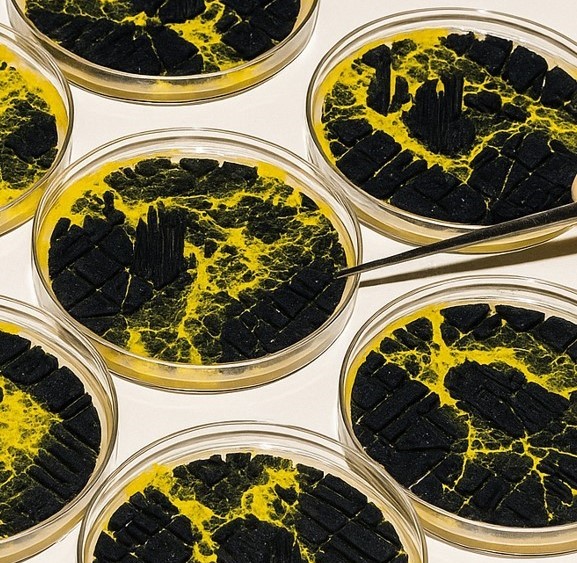
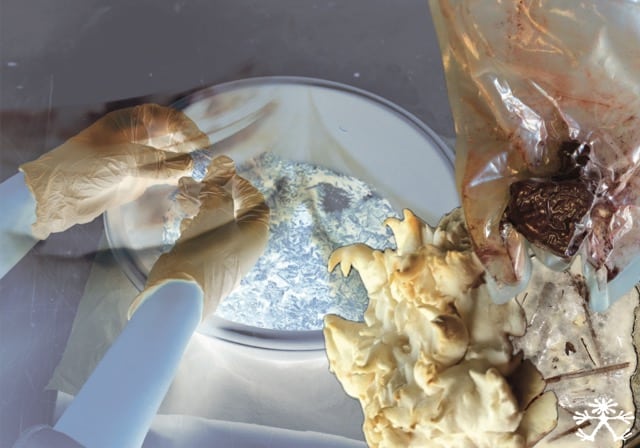
The work experiments with growing mycelium — primarily Ganoderma lucidum and Pleurotus ostreatus — on textile substrates sourced from post-consumer waste. Ganoderma is chosen for its structural strength and adaptability in forming biofabrics, while Pleurotus offers the ability to break down complex chemical structures due to its high metabolism. Together, they challenge the boundaries between fashion, waste, and biology.
This project emerges in response to the global overproduction crisis of the fashion industry and the ecological urgency to rethink material systems. Instead of designing new products, Materialchemy seeks to design new processes. The result is not a fixed object but a series of transitions: waste to substrate, substrate to culture, culture to textile. The garments grown during the project are not purely symbolic — they embody a speculative yet tangible future where materials are cyclical, alive, and embedded with ecological intelligence.
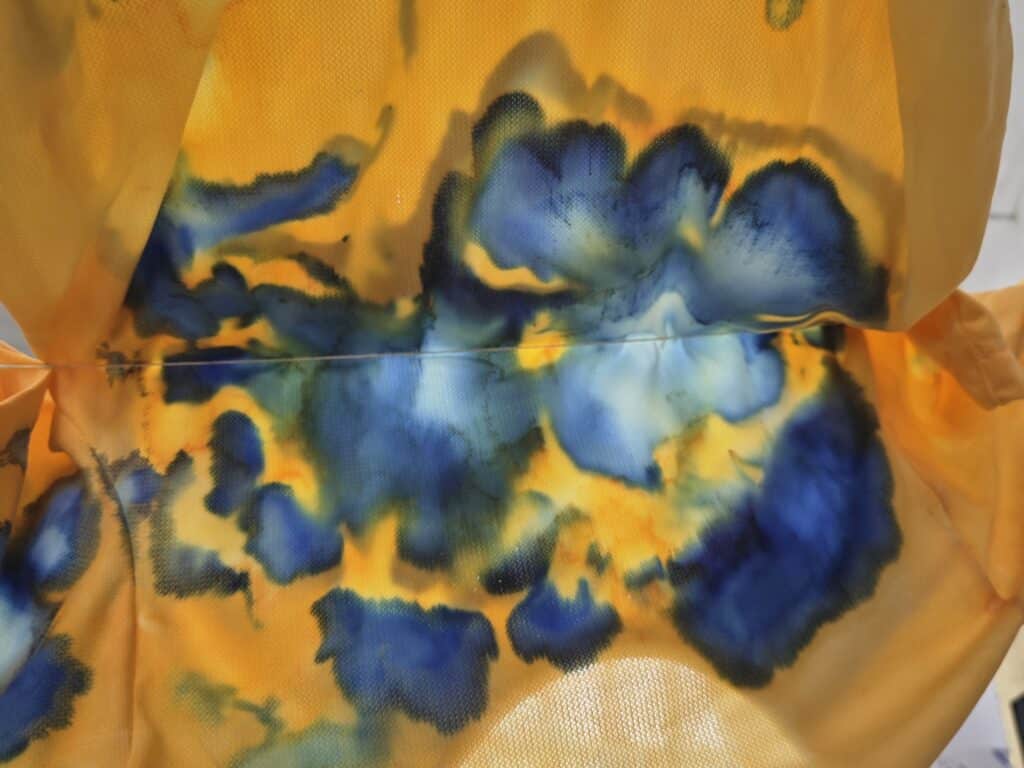
Throughout the year, the project has involved hands-on experimentation in microbial cultivation, biofabrication, material testing, and the integration of textile knowledge into living systems. The garments and material samples become both artefacts and evidence — not of perfection, but of an evolving dialogue between decay and design. This process also becomes a form of resistance: to consumerism and its extractive industry, and to the idea of fast innovation.
Materialchemy invites us to rethink not just what we wear, but what our materials could become, and what it means to collaborate with other species in designing the future.