How did we go from normalising to sensationalising mental health?
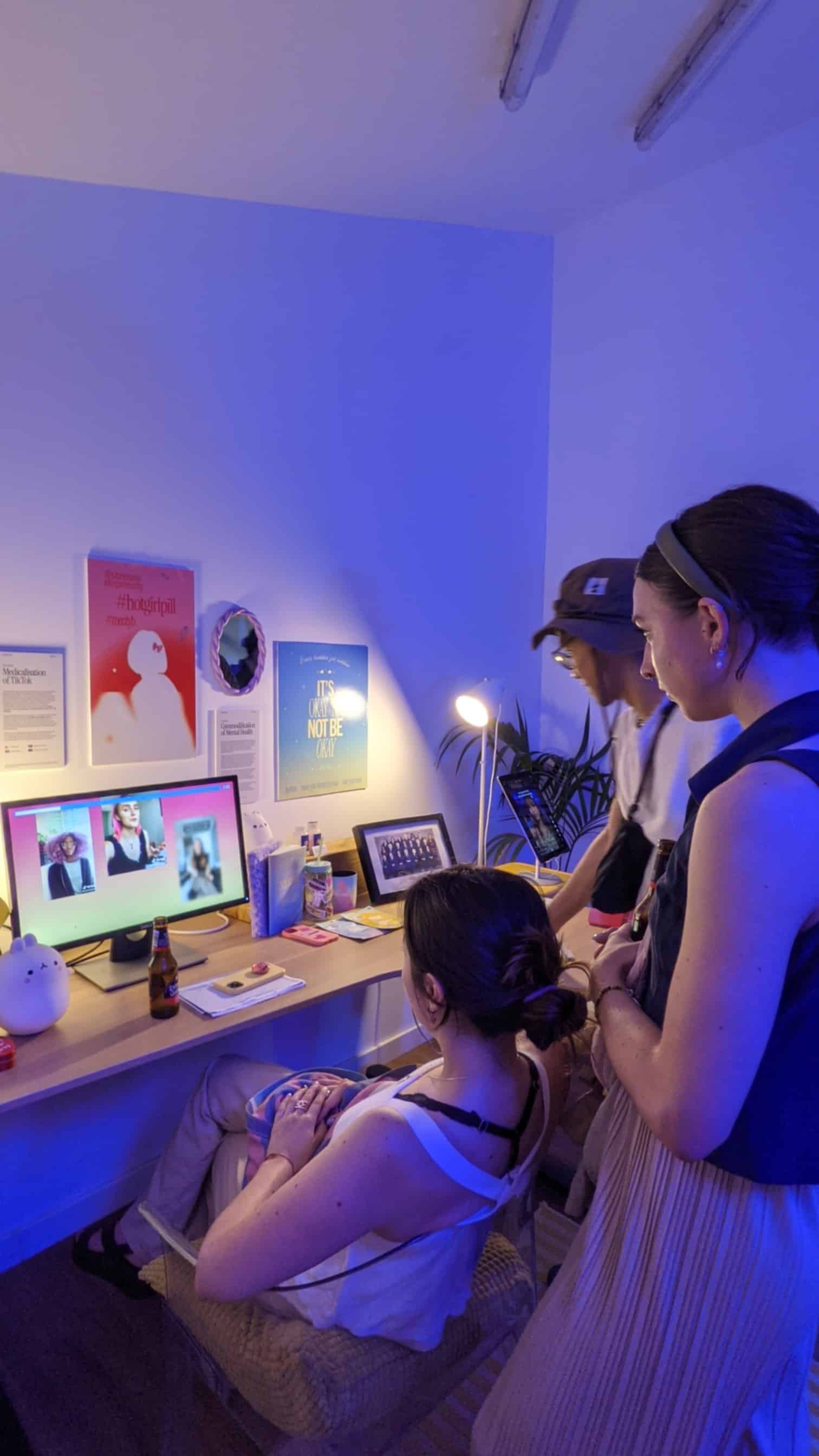
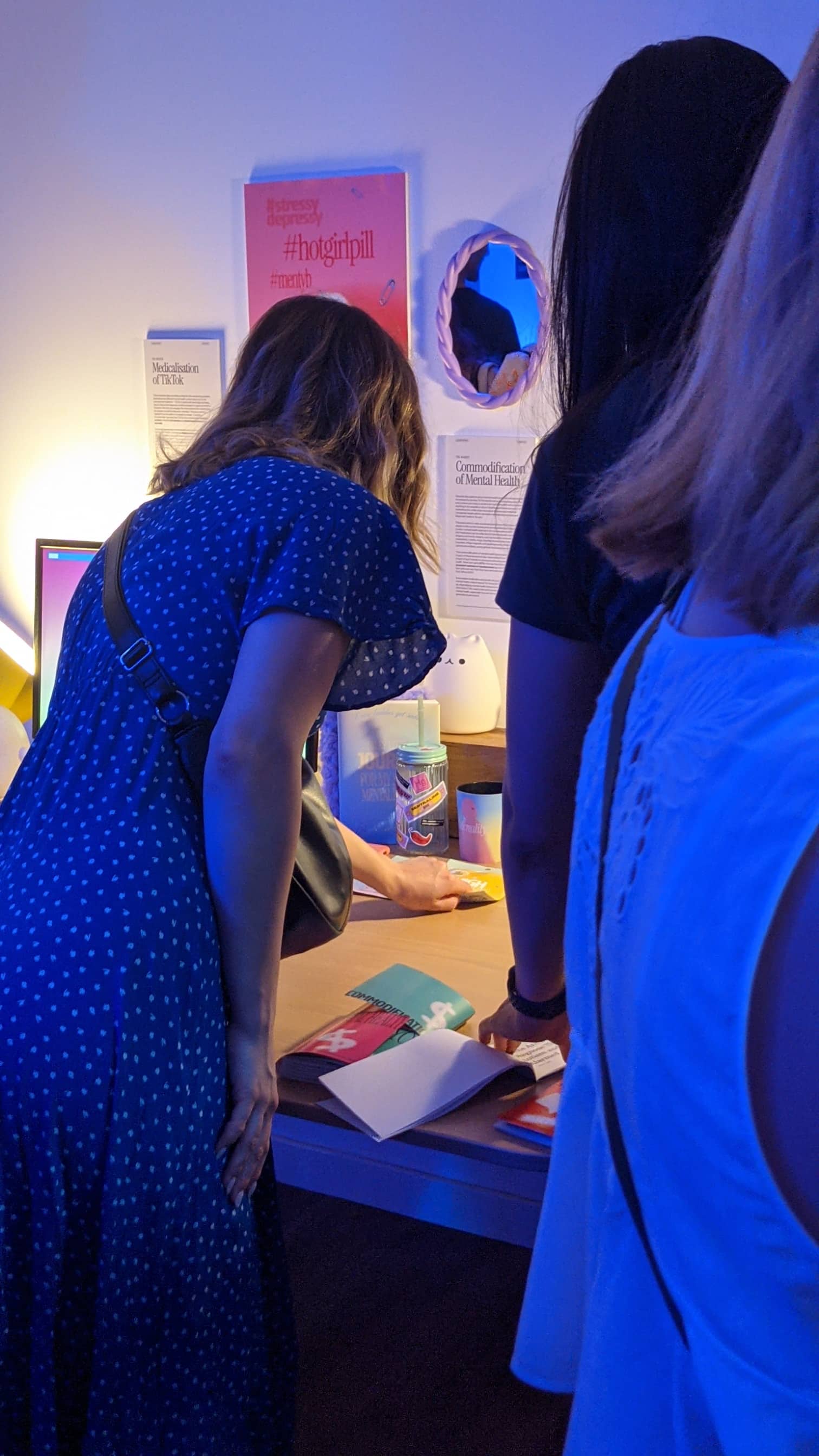
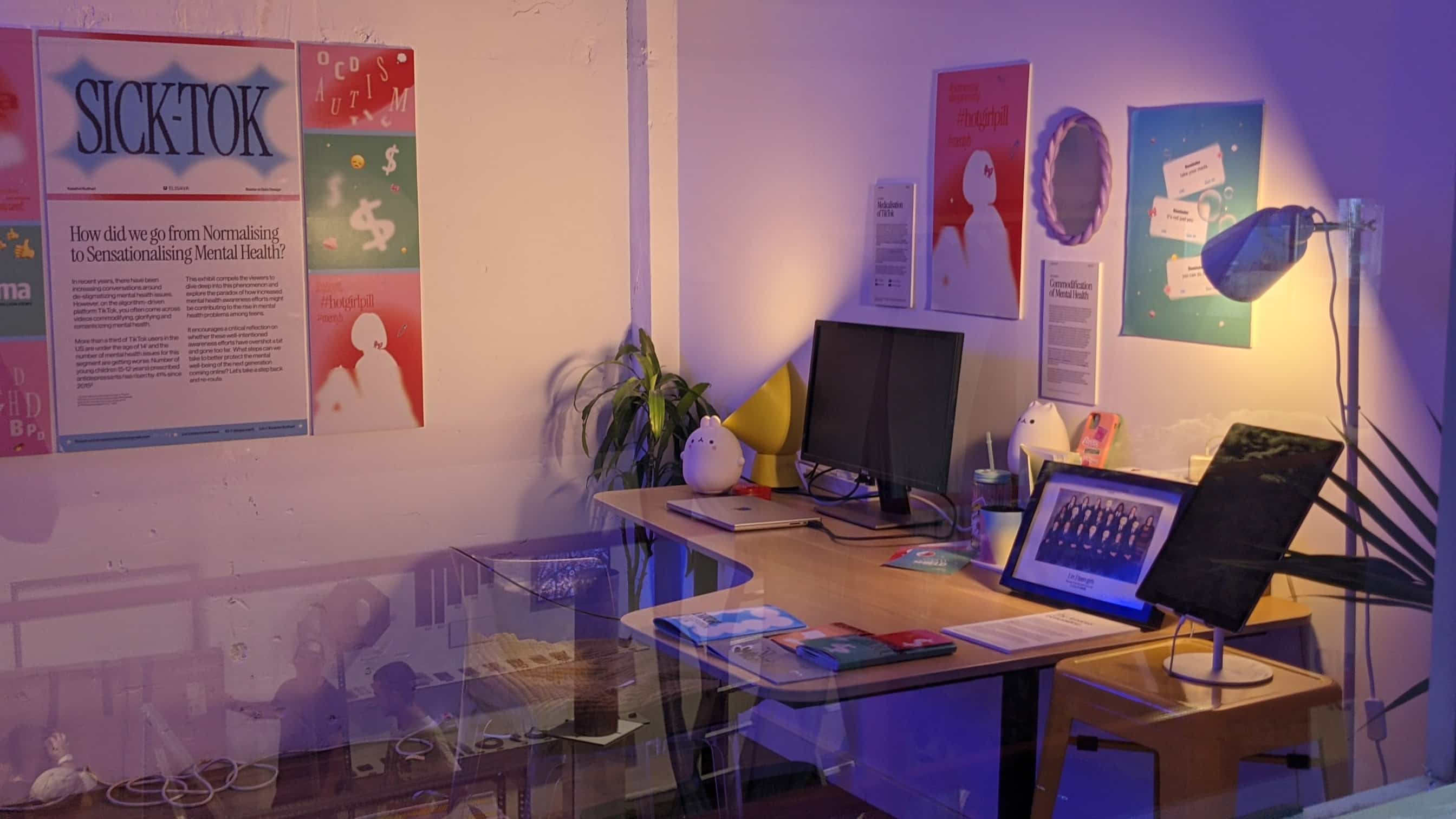

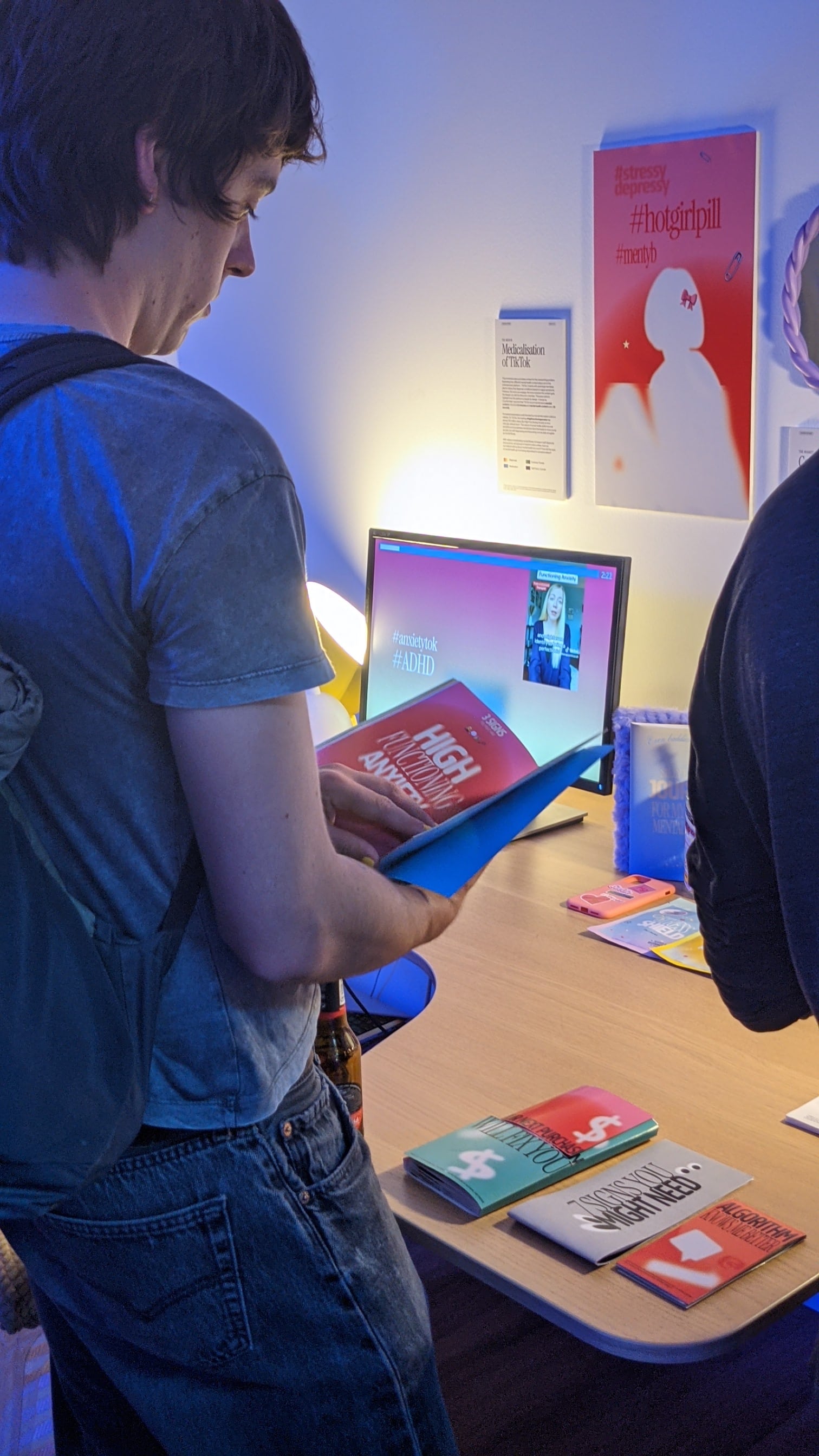
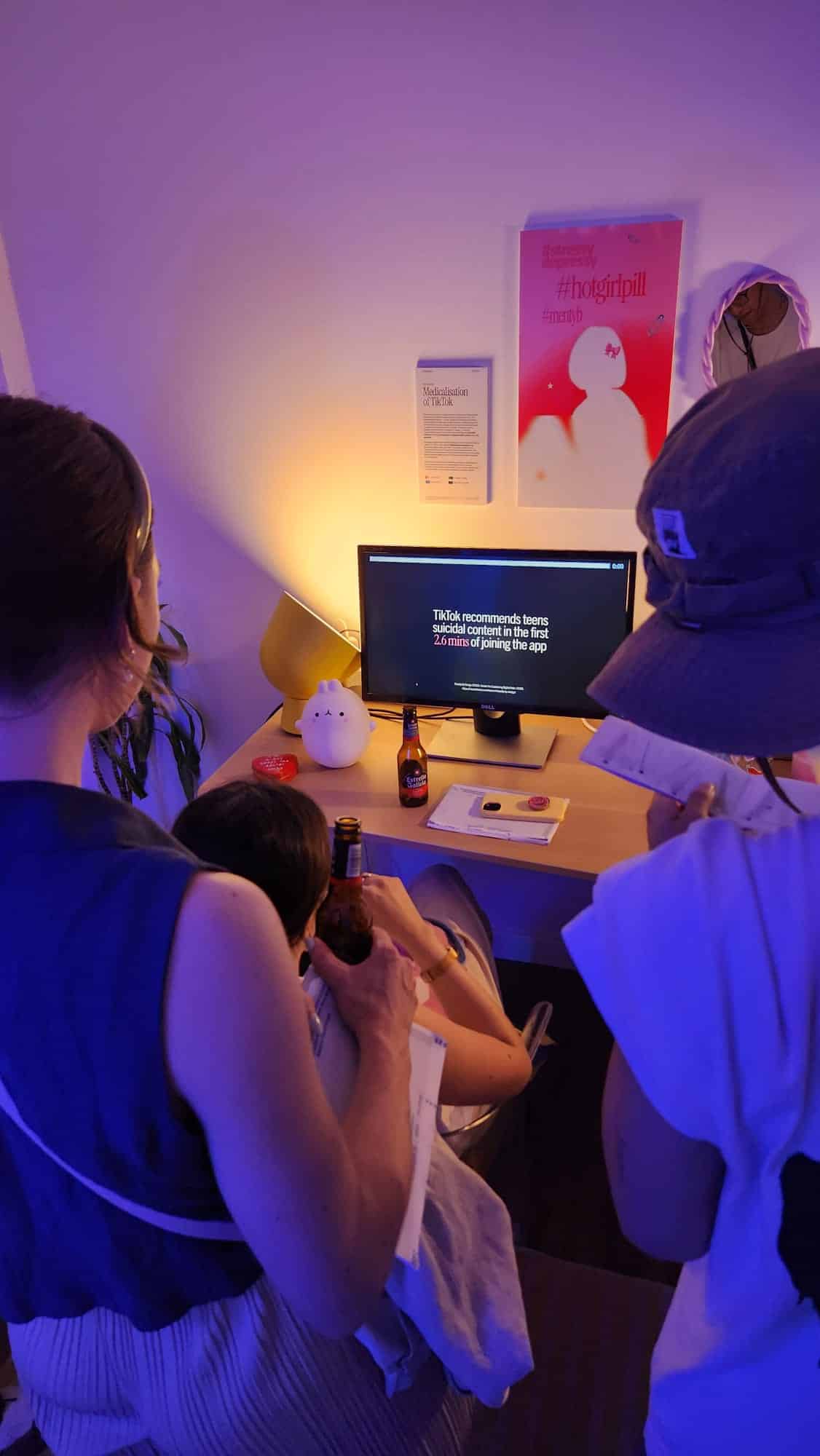
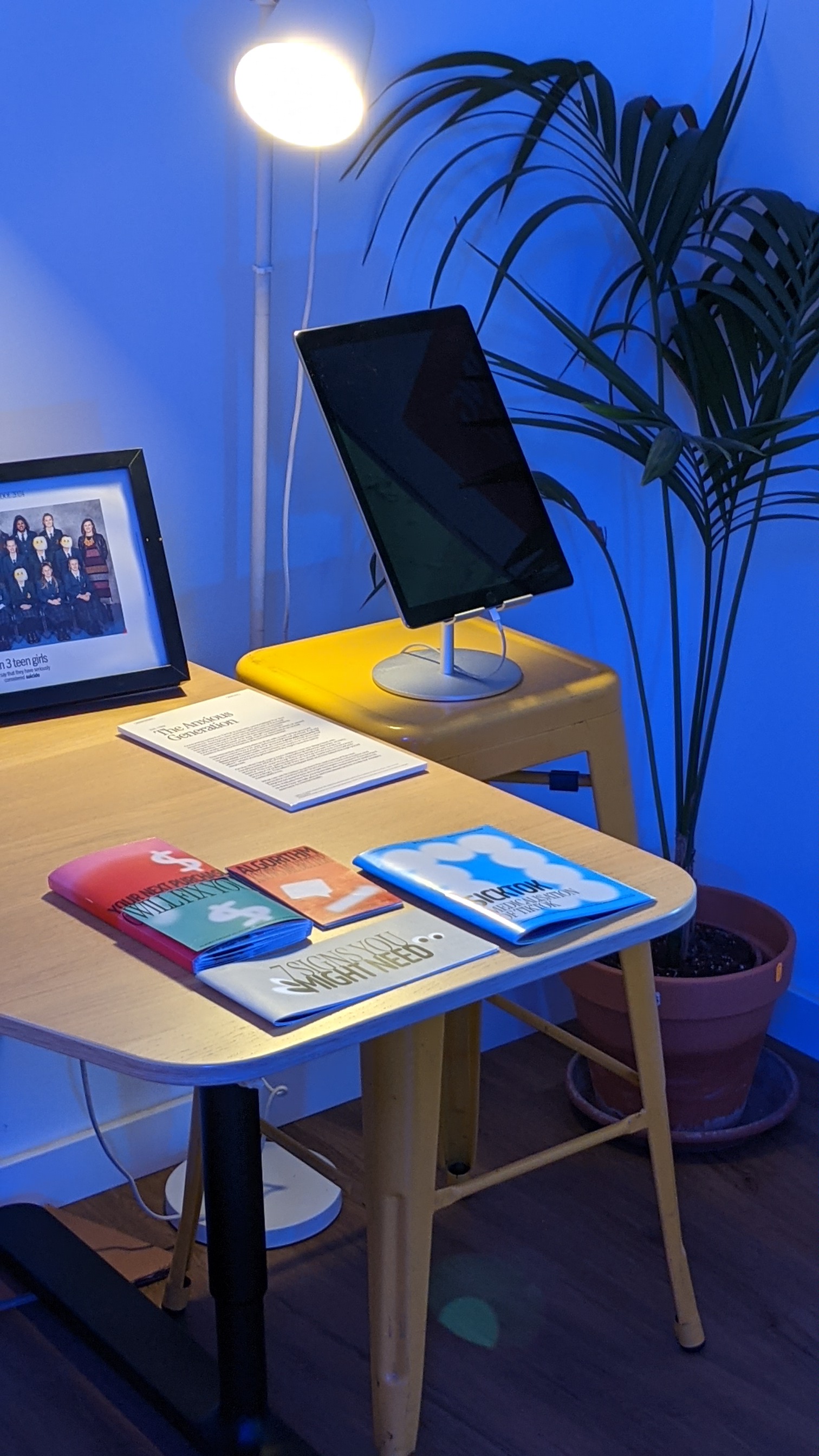
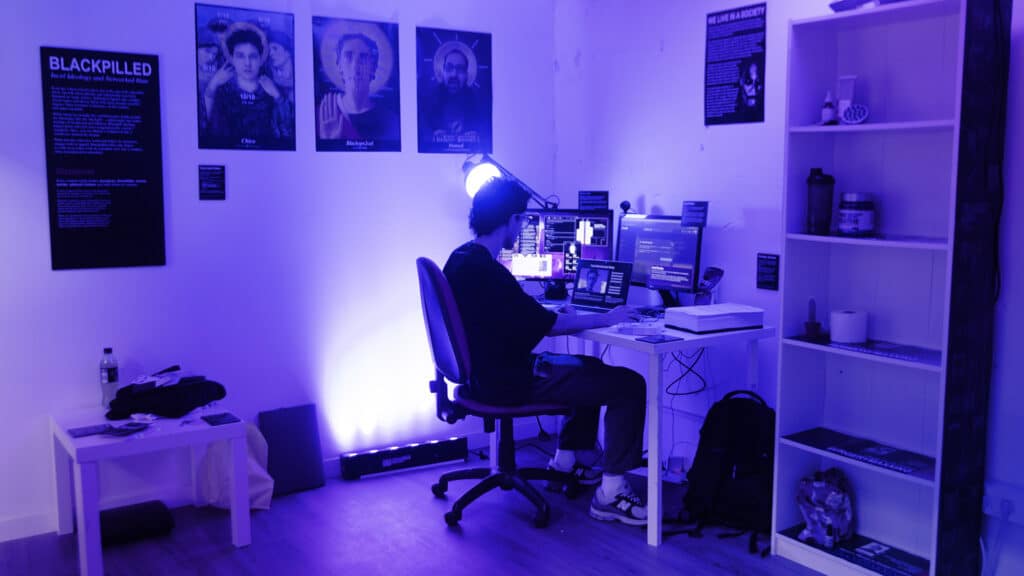
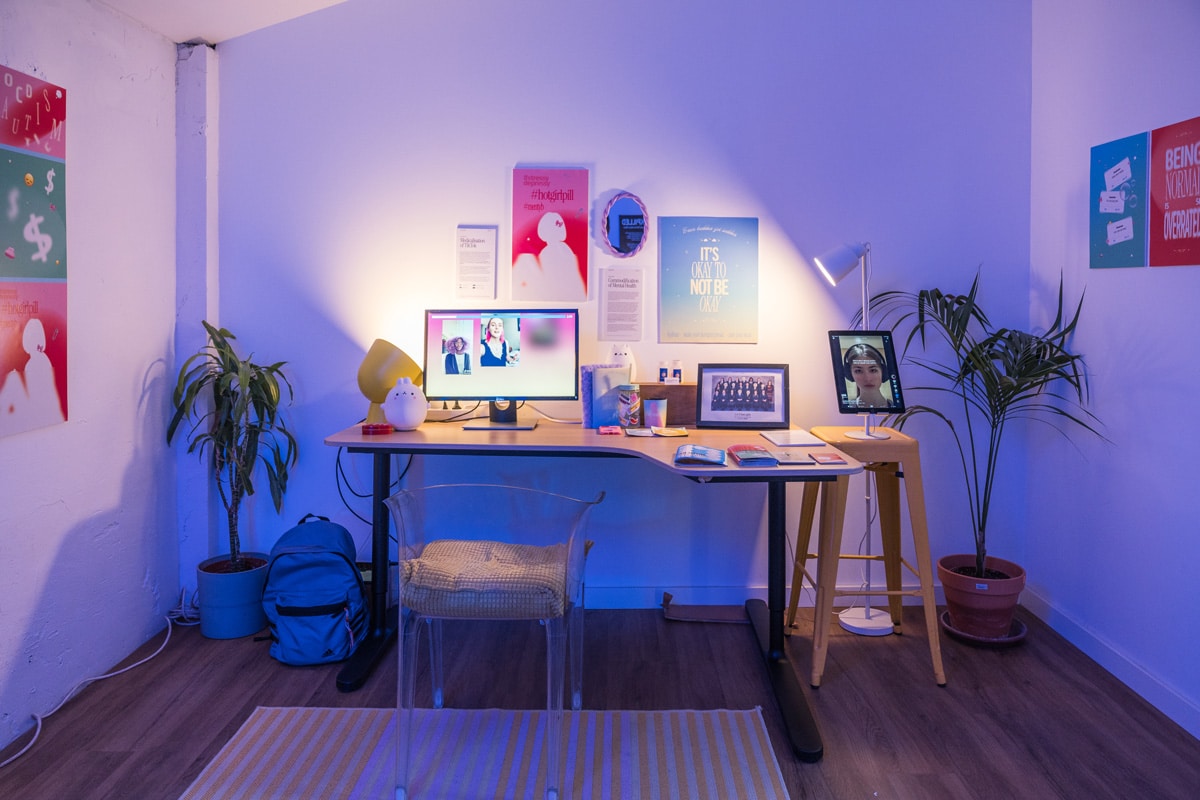
To make this complex phenomenon more easier to understand, the installation takes form of a young girl’s desk setup and walks the viewer through 3 different parts – the medium, the user and the market.
The first part is a time-based audio-visual representation of data which gives context and talks about the over-arching problem illustrating how different mental health content plays out on the entertainment platform–TikTok. It starts with seemingly harmless, playful videos that diagnose conditions. based on vague symptoms. However, the more you engage, the more extreme the content gets, the deeper you fall into this echo-chamber. A study by CounterHate reported that TikTok recommends teens suicidal content in the first 2.6 minutes of joining the app and mental health content every 39 seconds.
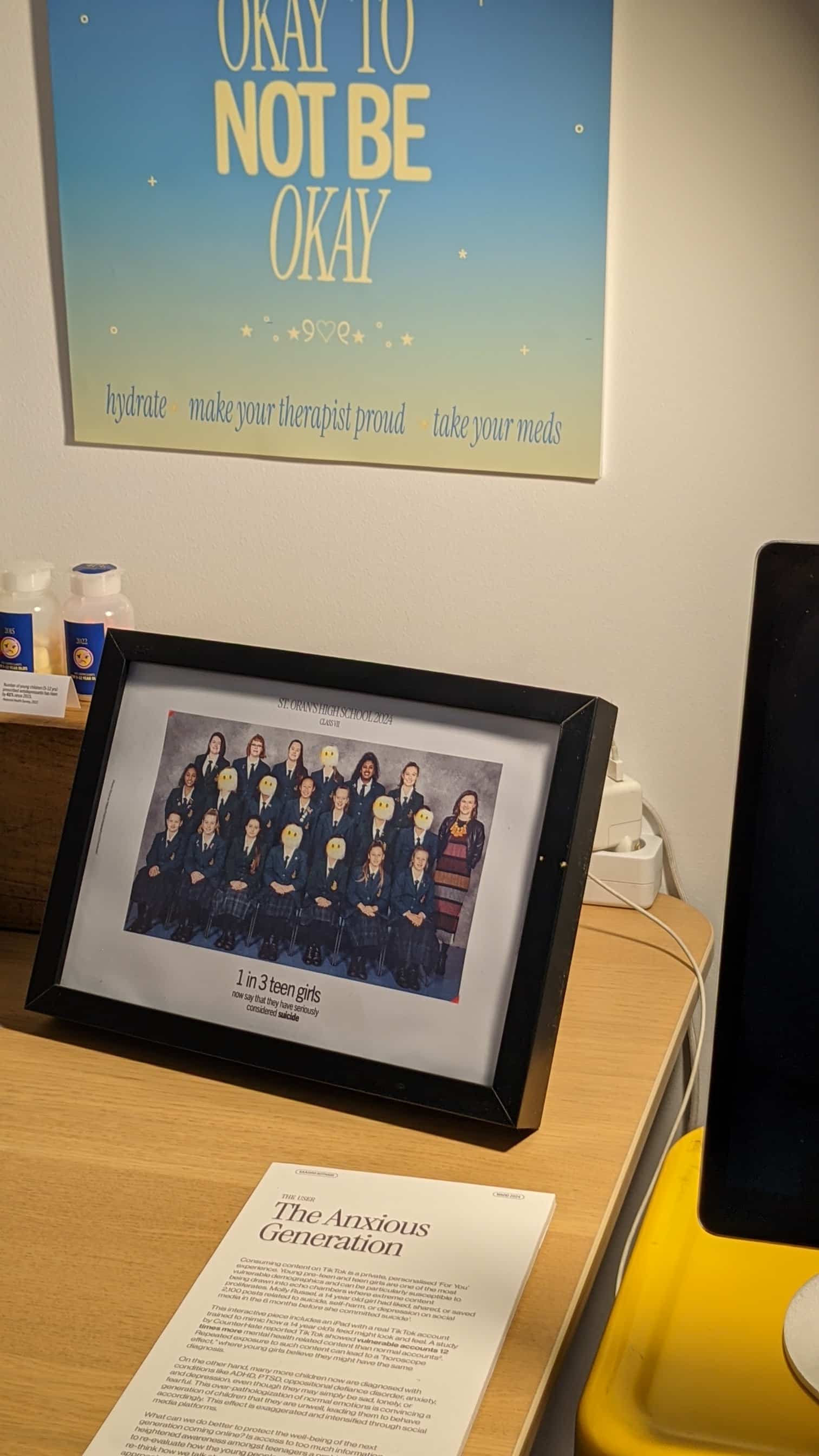
The second part aims to raise awareness about the commodification of mental health. All over the place, you can find people trying to make a buck off ‘mental health’ as a concept without really providing anything meaningful in exchange. Brands and influencers use it as a marketing tool. Pharma, therapy and wellness companies target ads promoting their services, medications, retreats and diagnostic tests to ‘fix you’. The commodification of mental health topics not only diminishes the impact of these issues but raises ethical concerns about the impact of such trends on young people’s perception of mental health. This piece uses common objects from a young girl’s desk like a class photograph, medicine bottles, phone cases, journal, candle etc to physicalise data to talk about declining mental health in teen girls. The main goal was to make the commodification and its effects visible and push the viewers to touch, interact, engage and start a conversation.
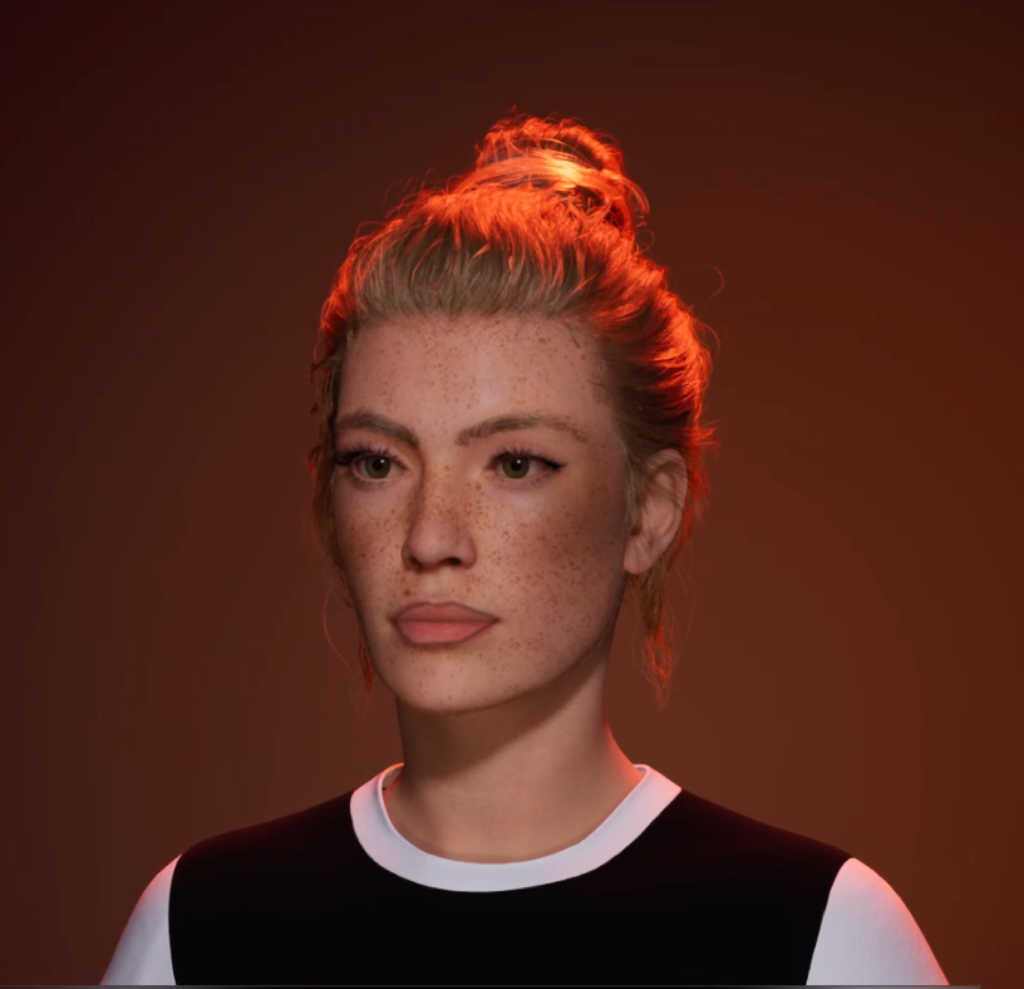
The third part aims to dive deeper into one of the most vulnerable demographics– young pre-teen and teen girls, who are particularly susceptible to being drawn into echo chambers where extreme content proliferates. Molly Russel, a 14 year old had liked, shared or saved 2100 posts related to suicide, self-harm or depression on social media in the 6 months before she committed suicide. Consuming content on TikTok is a very private, personalised ‘For You’ experience. This interactive piece aims to raise awareness with real-time data visualisation– an iPad with a real TikTok account, trained to mimic how a 14 year old’s account could look and feel like.