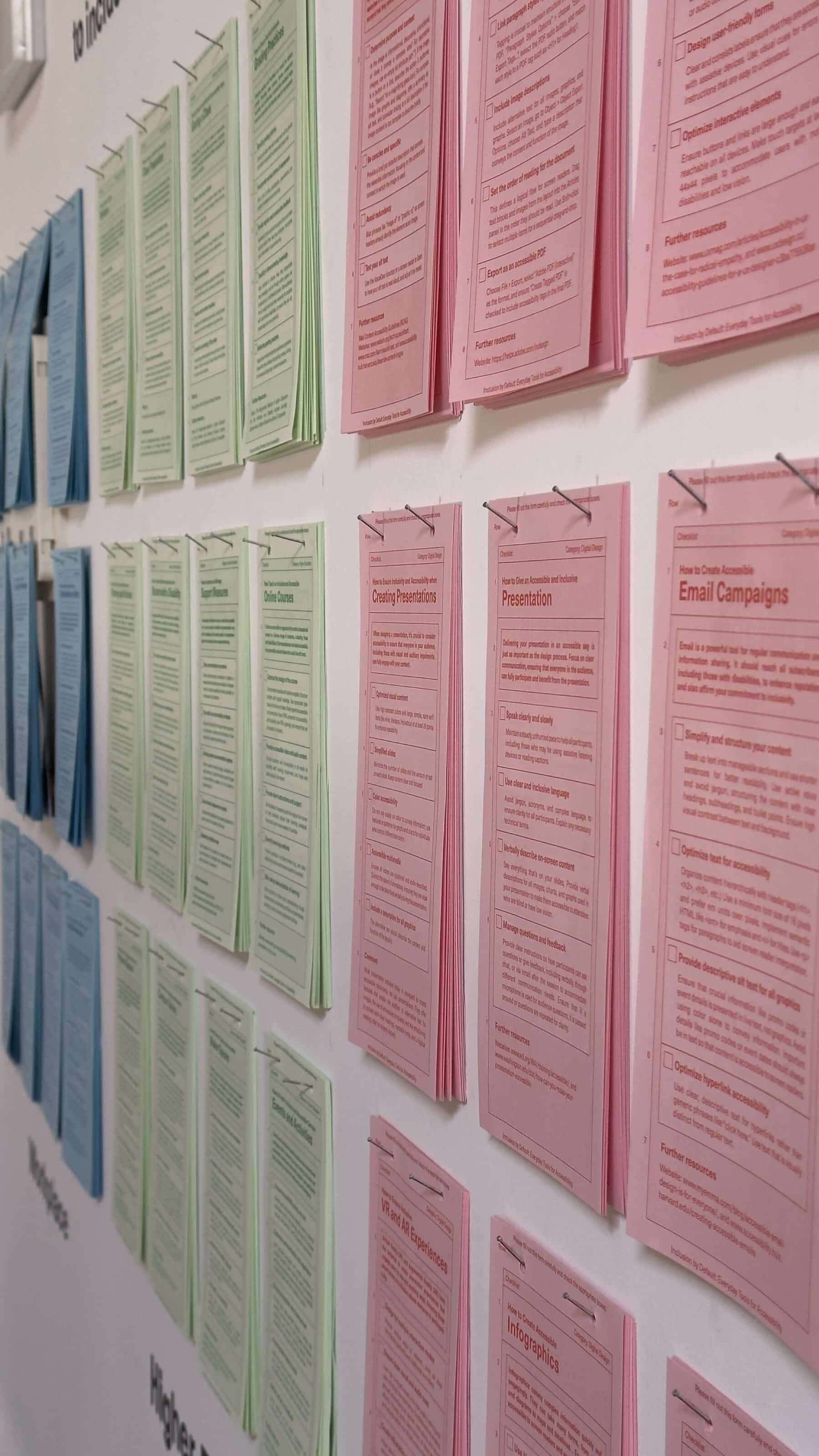
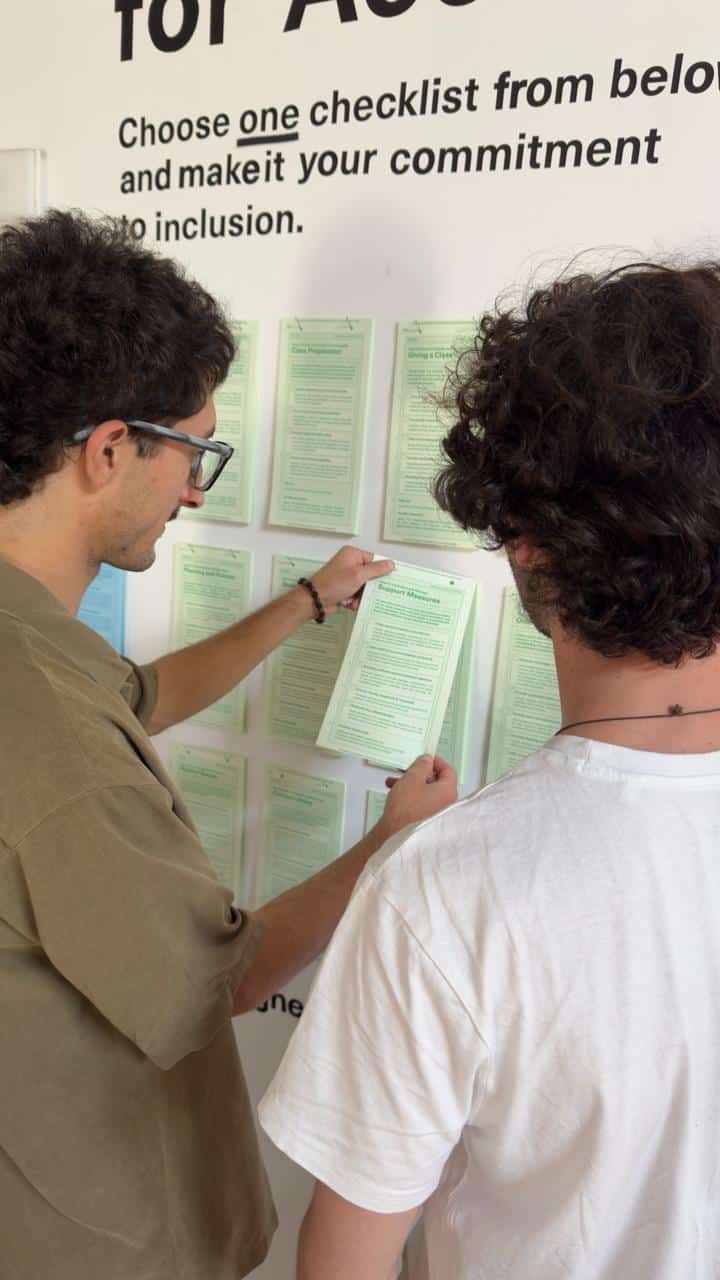
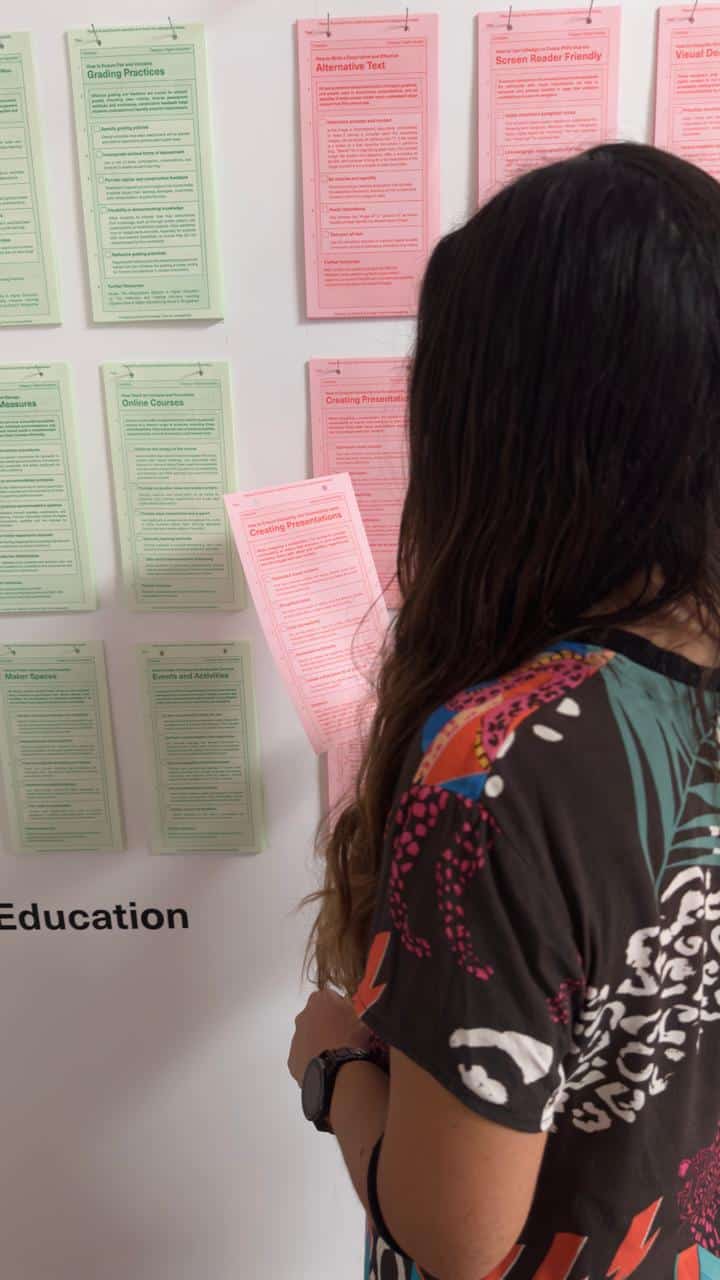
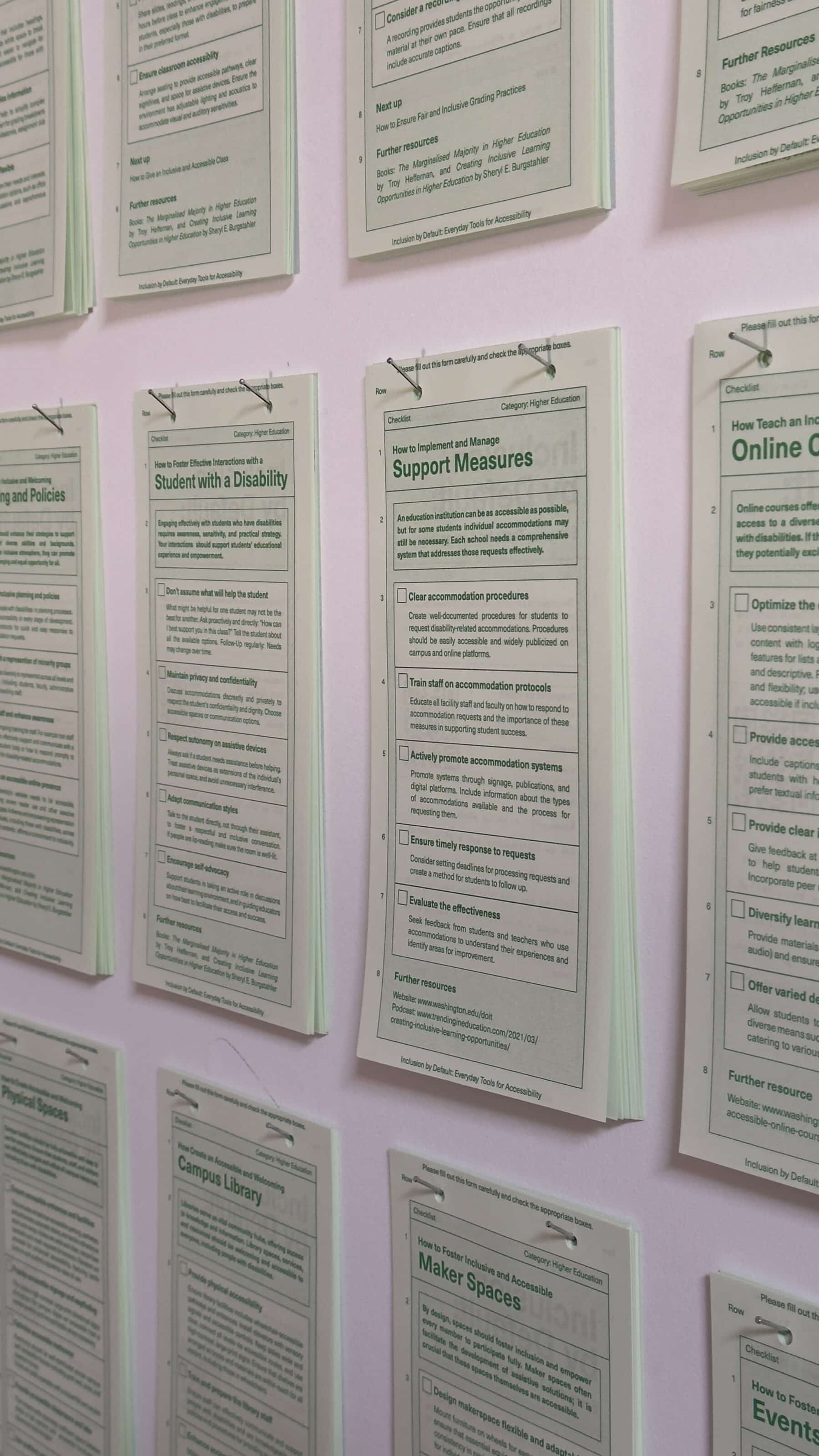
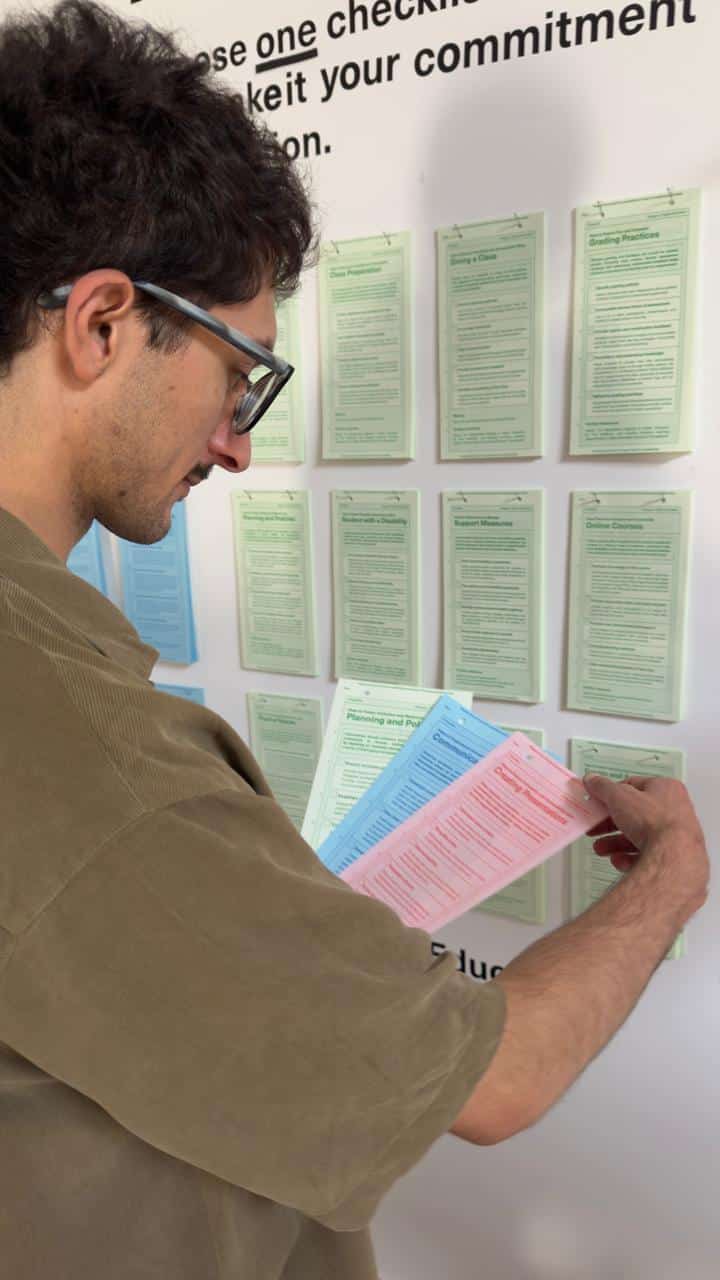
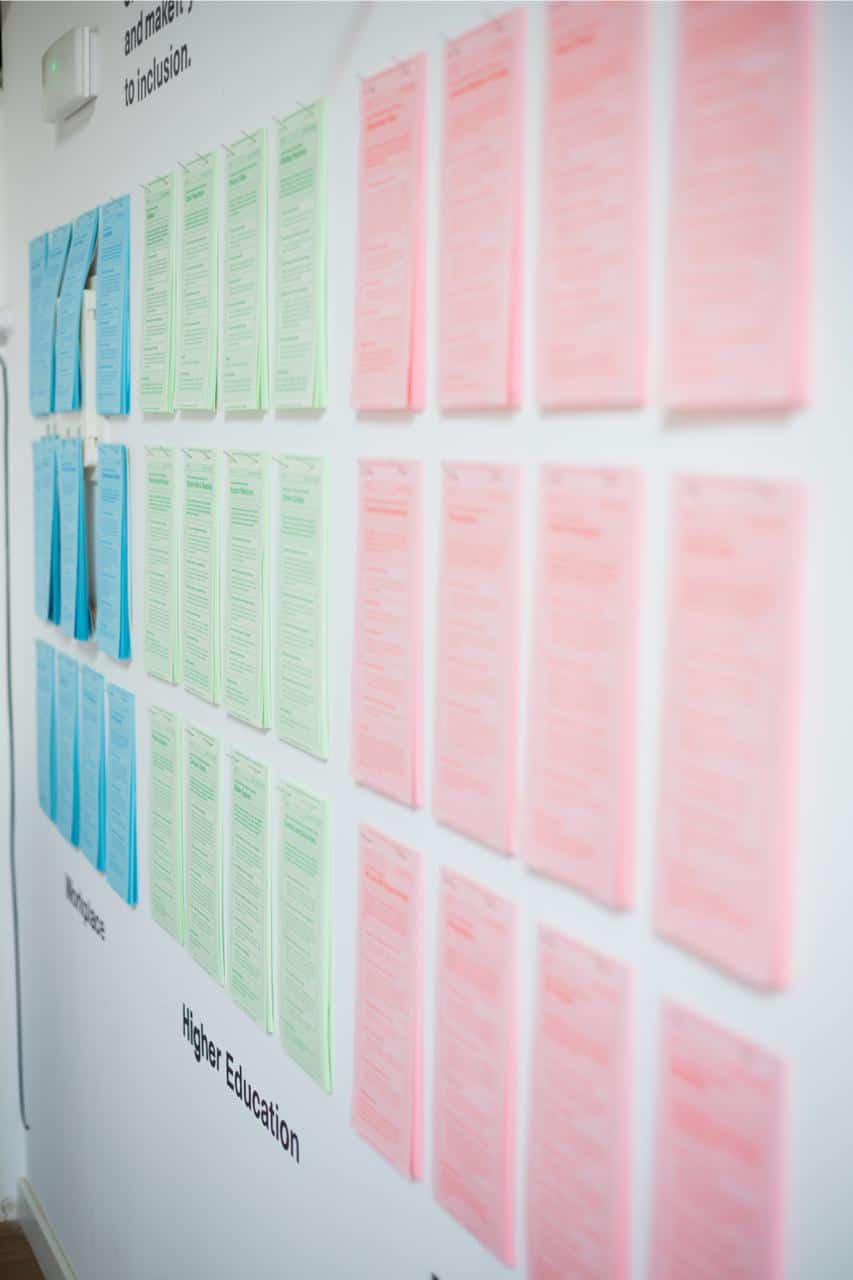
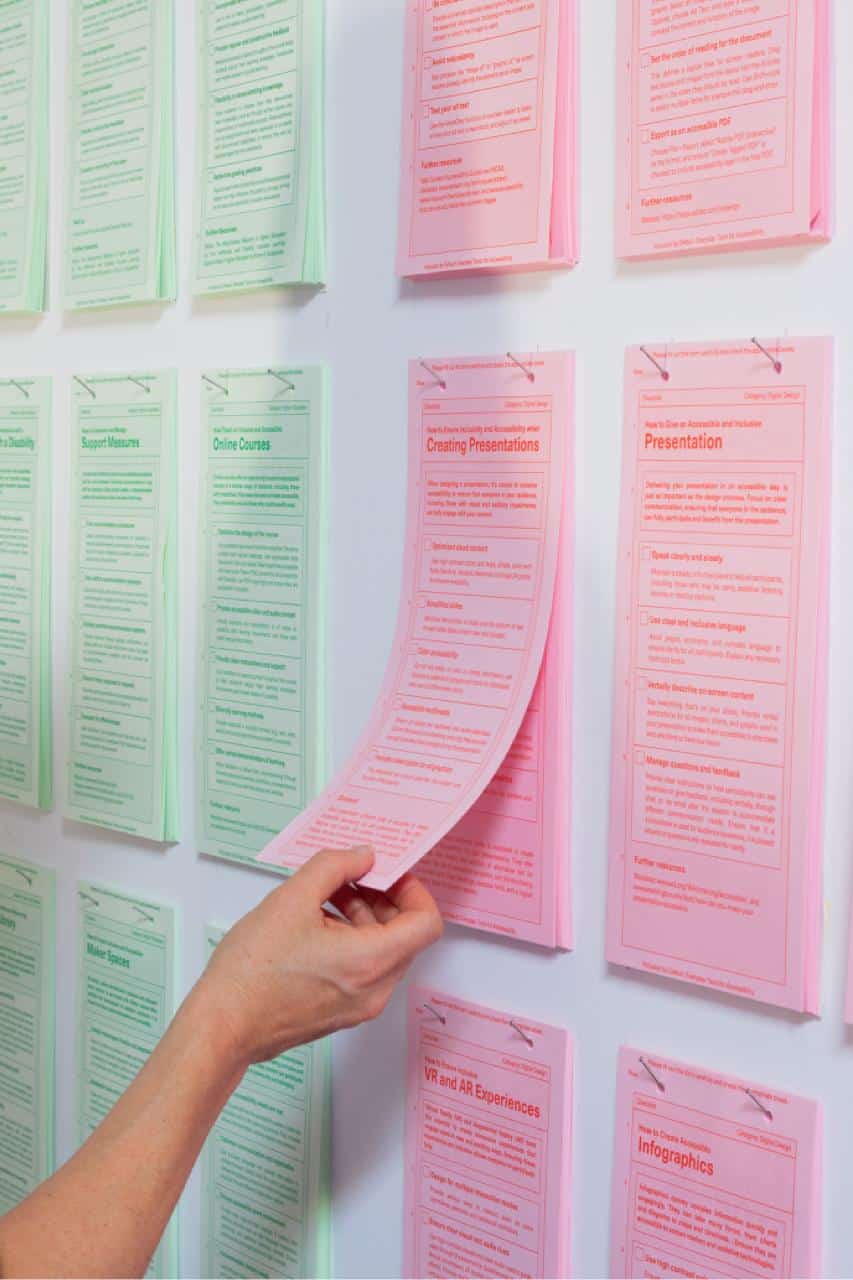
It offers real solutions through an interactive and participatory experience. Stacks of checklists are arranged on a wall, each dedicated to improving accessibility and fostering inclusivity in specific areas: at your workplace, in your next class, in your design projects, or in your exhibitions.
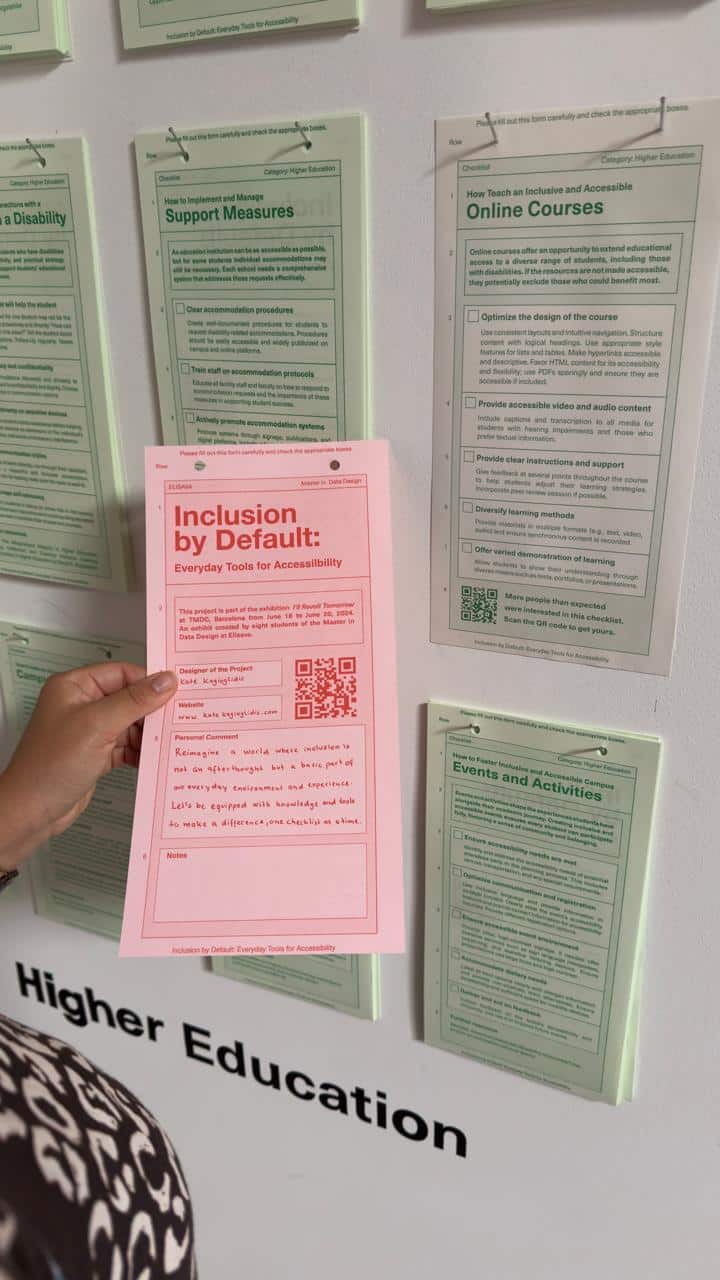
"Reimagine a world where inclusion is not an afterthought but a basic part of our everyday environment and experience. Let’s be equipped with the knowledge and tools to make a difference, one checklist at a time."
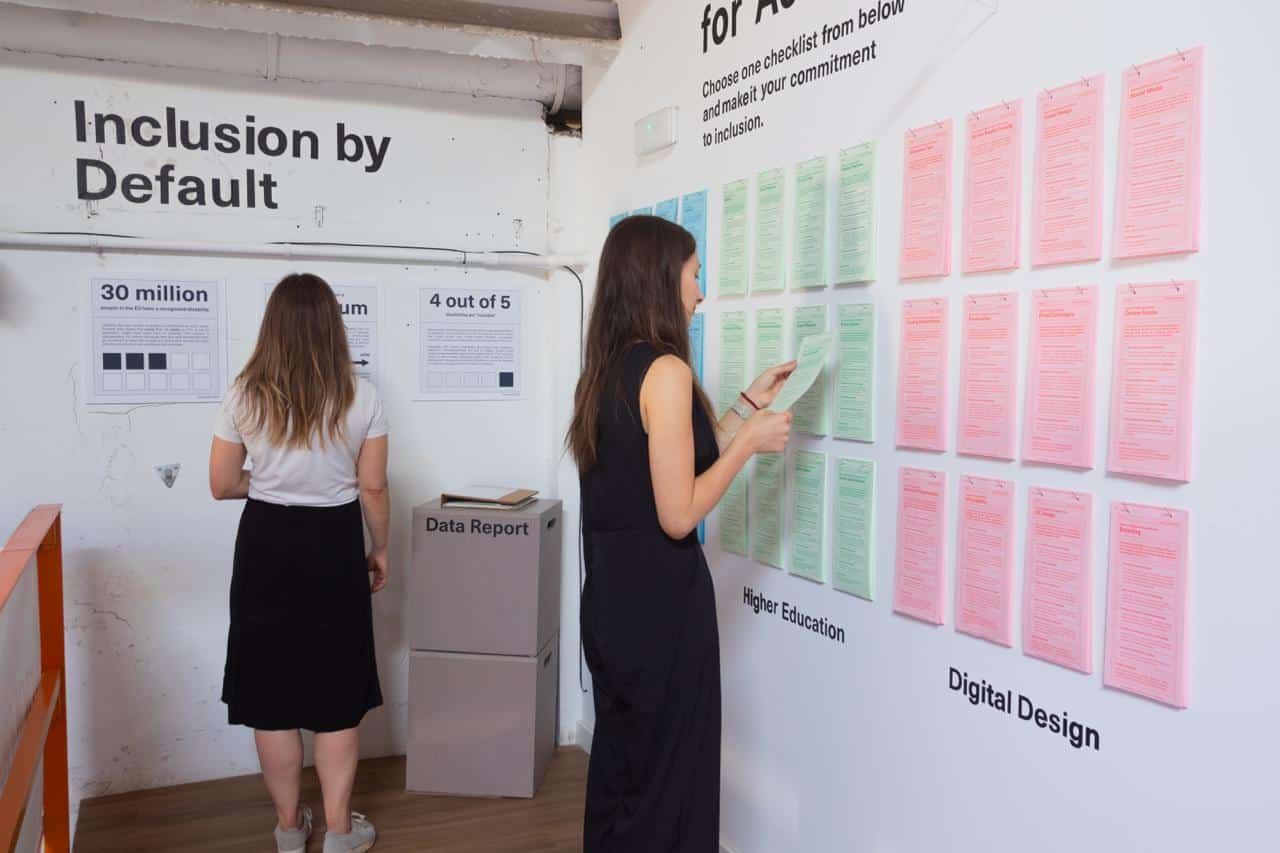
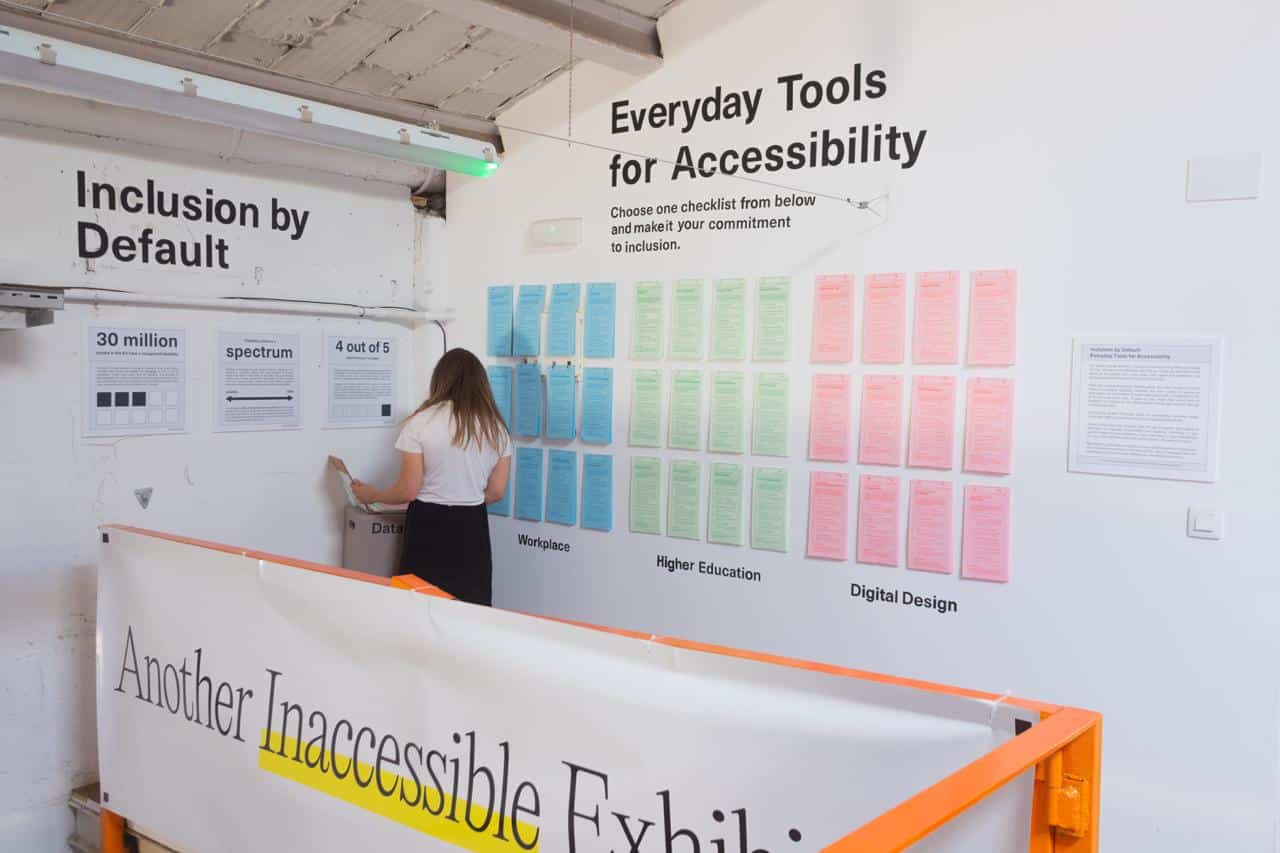
Often, we overlook the largest minority group. 30 million people in the EU have a recognised disability. However, the real number of people is estimated to be much higher. Eurostat data shows that 1 in 4 adults or 27% of the EU population over 16 years of age, might have some form of disability. That equals to 101 million people, facing daily barriers that go unnoticed by many.
Inclusion by Default: Everyday Tools for Accessibility confronts these challenges, offering real solutions through a participative exhibit.
The stacks of checklists are arranged on a wall were there to explore. Each stack is dedicated to improving accessibility and fostering inclusivity in one specific aspect: at your workplace, in your next class, in your next design, or in your next exhibition. Consider which one you are ready to explore.
Reimagine a world where inclusion is not an afterthought but a basic part of our everyday environment and experience. Let’s be equipped with the knowledge and tools to make a difference, one checklist at a time.
Disability encompasses a wide range of abilities, ranging from full capability to complete inability, with many variations in between. People may differ in their ability to see, walk, hear, communicate verbally, use a mouse, perform fine motor tasks, or filter out noise. Some may require assistive devices, like screen readers, to perform these tasks effectively, while others experience fluctuating abilities.
An individual’s ability is influenced by various factors. Environmental barriers like accessible design features, social and cultural contexts, and intersections with race, gender, and socioeconomic status all play a role. Recognizing these complexities is crucial for raising awareness and ensuring accessibility for everyone.
4 out of 5 disabilities are invisible. Apparent and intermittently apparent disabilities make up about 80% of all disabilities. These conditions are not immediately obvious to others and include chronic pain, mental health disorders, neurological conditions, and sensory impairments like partial hearing or vision loss.
Individuals with invisible disabilities face stigma and skepticism, leading to misunderstandings and lack of support. Despite being unseen, these disabilities significantly impact daily life. The fluctuating nature of many invisible disabilities adds to the complexity of their management. Recognizing invisible disabilities is crucial for fostering an inclusive and supportive environment for everyone.