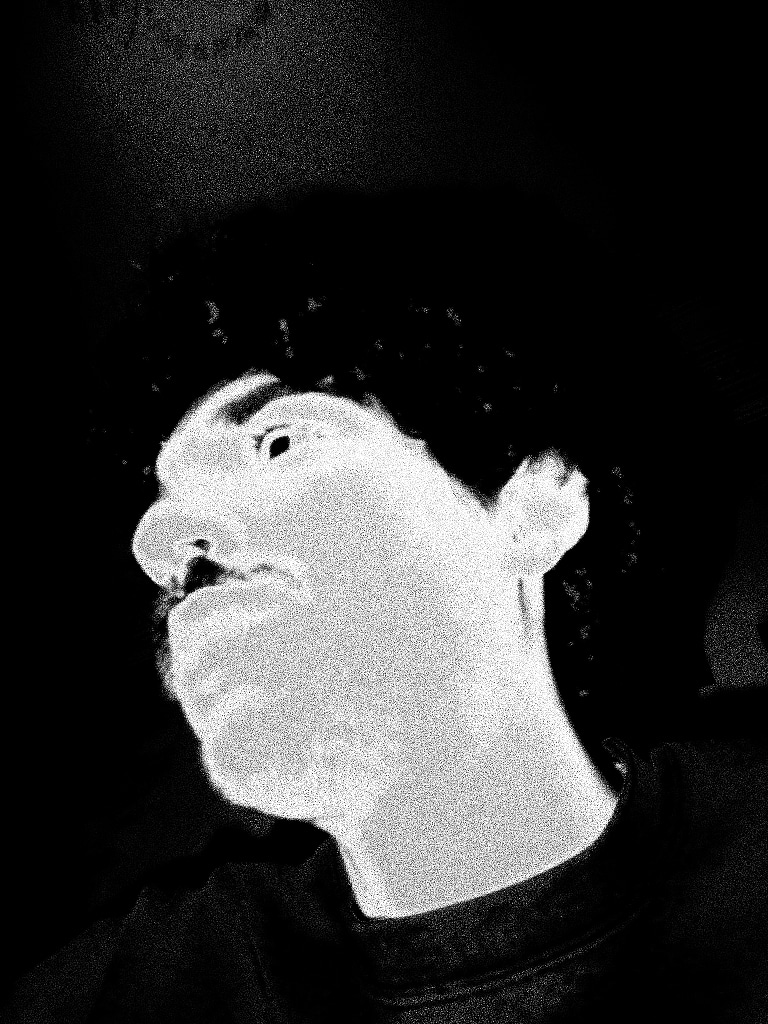
Guilherme Simas (Rio de Janeiro, 2000) is a multidisciplinary designer and artist. His practice moves across furniture design, urban art, and experimental research, with a strong emphasis on intuitive processes of observation, material exploration, and the reappropriation of discarded objects.
Simas began his artistic path through urban art, particularly through stenciling—a technique that shaped his approach to surface, texture, and the layered history of public space. This early engagement with the city sparked his interest in the expressive potential of ordinary materials and the visual traces left behind by time. The immediacy of stenciling continues to inform his methods today, where improvisation and attentiveness to context play central roles.
Over the years, his work has unfolded into projects that explore the poetic and narrative potential of found objects. Scavenging—through walks, construction sites, or forgotten corners of the city—has become a recurring gesture in his creative process, activating a form of listening and a dialogue with the unexpected. These collected elements are often reinterpreted and transformed into new compositions—furniture, sculptures, or hybrid artifacts that blur the lines between design, memory, and fiction.
In his academic research, Simas investigates the boundaries between utilitarian and symbolic objects, proposing experimental strategies that challenge the logic of industrial production. Most recently, he has been exploring the visual and historical dimensions of television antennas in Barcelona, treating them as sculptural forms and analog relics of communication infrastructure.
At the core of his work lies a sensitivity to material memory, manual processes, and a certain improvisational ethos as a critical tool. His objects often inhabit a space between art and design, inviting viewers to rethink conventional codes of utility and aesthetics. By working with what has been cast aside, Simas builds a practice that is at once archaeological and propositional—a way of excavating the present in order to imagine alternative futures.