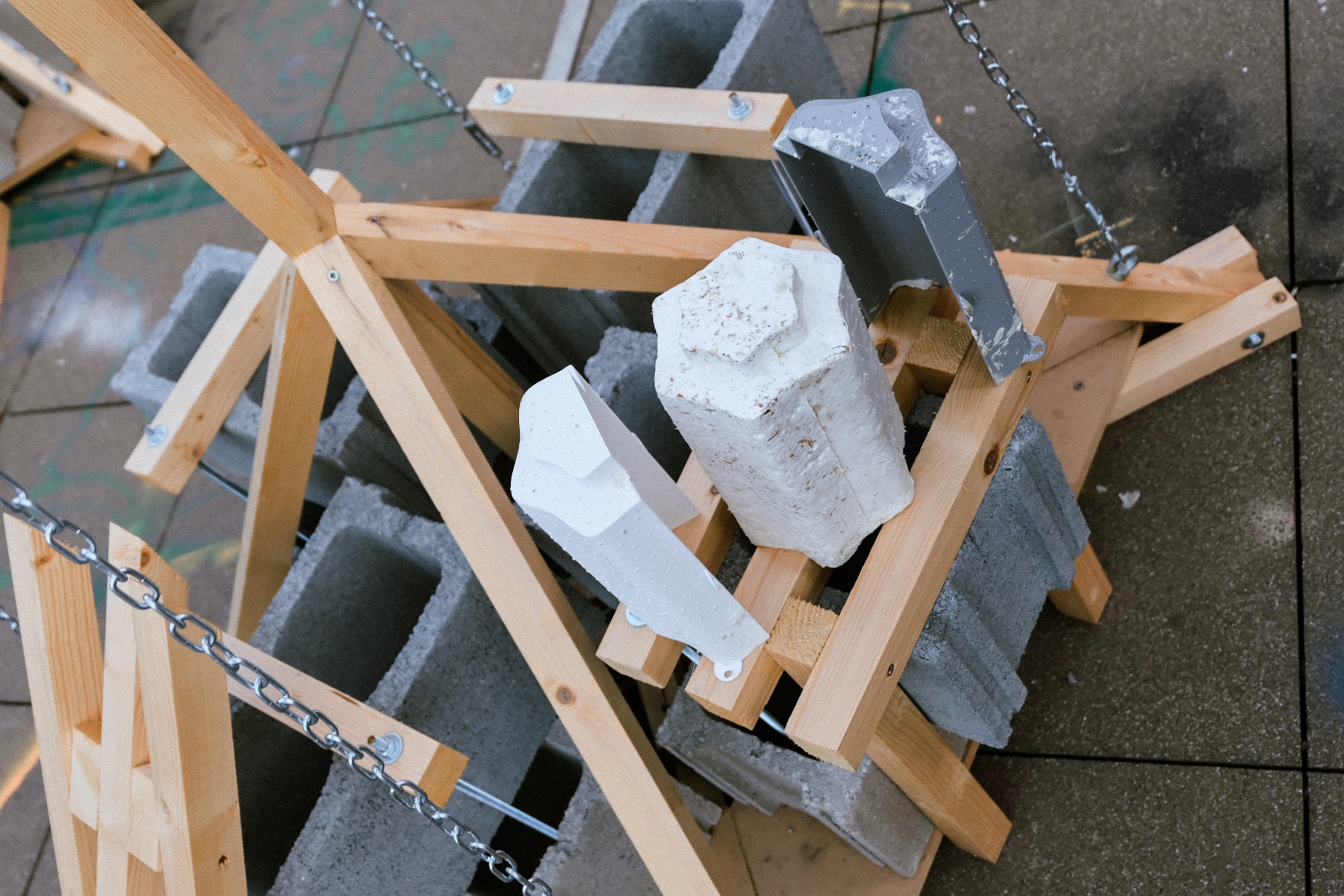
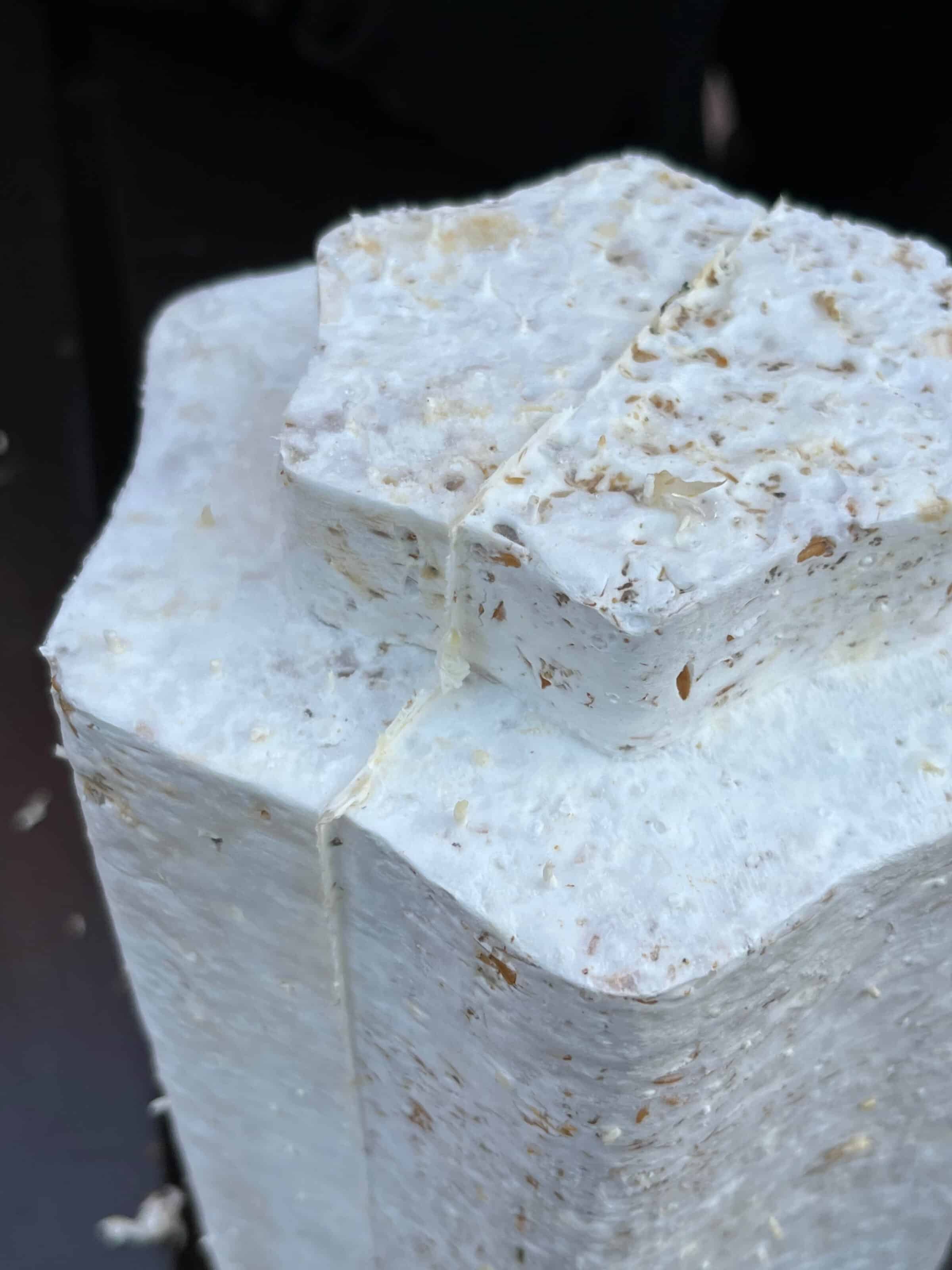
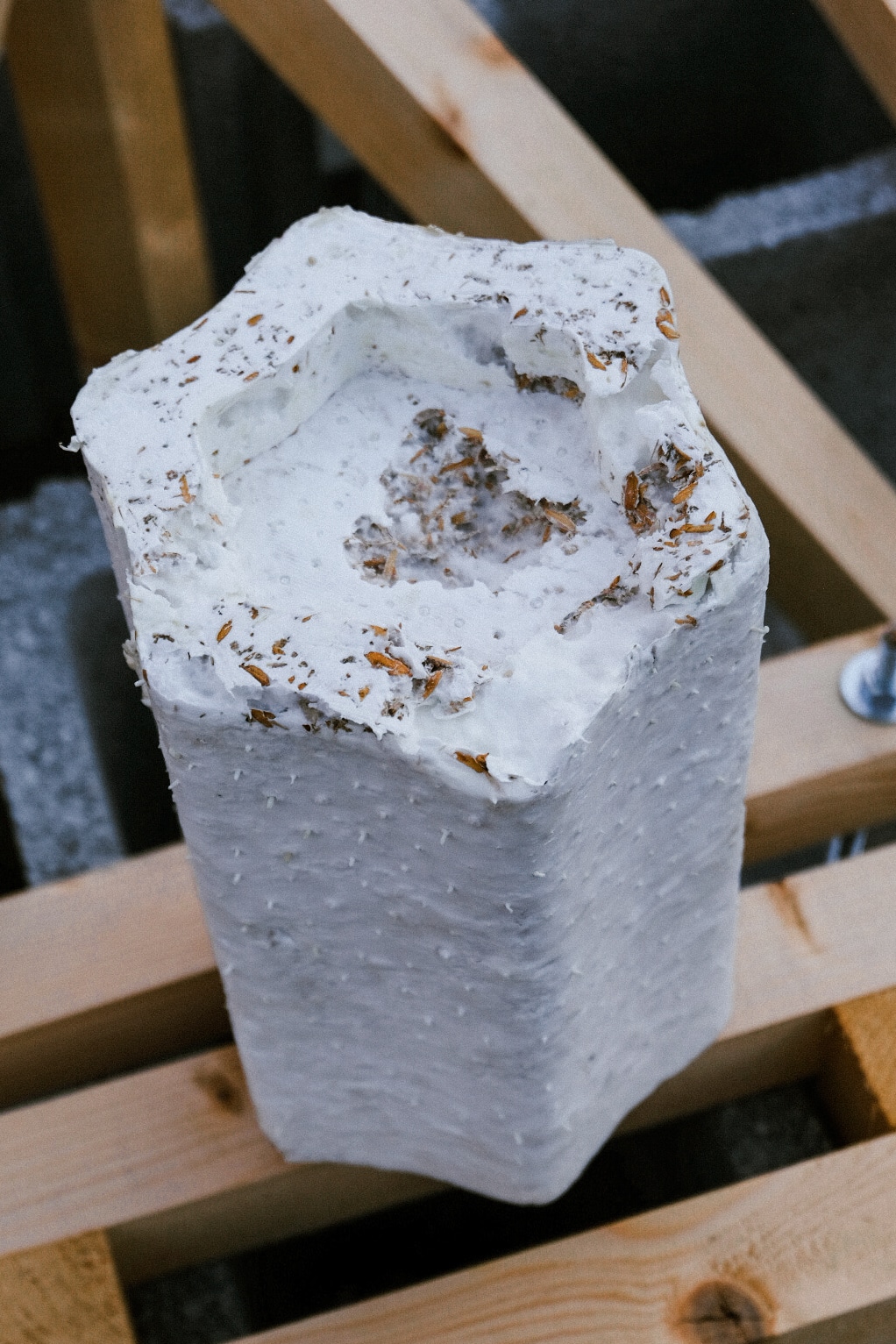
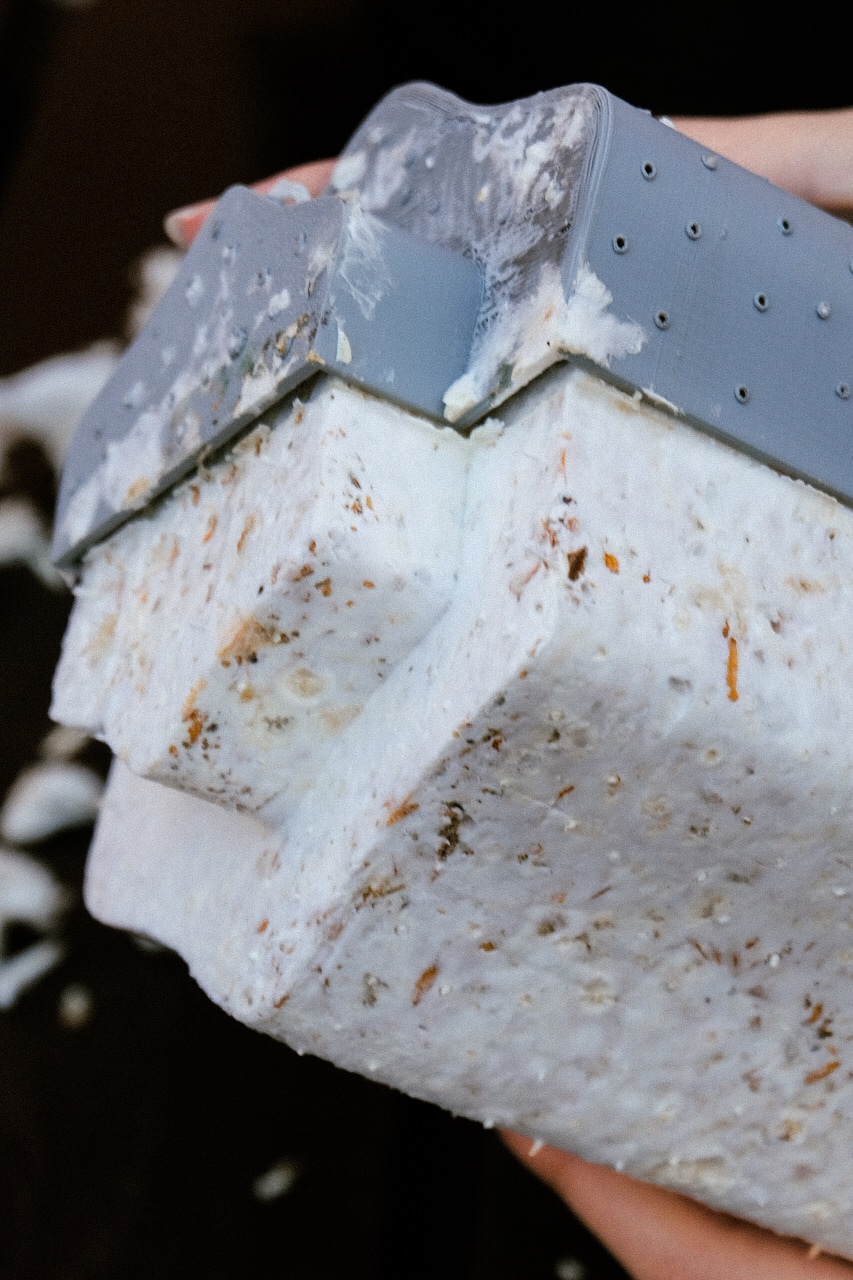
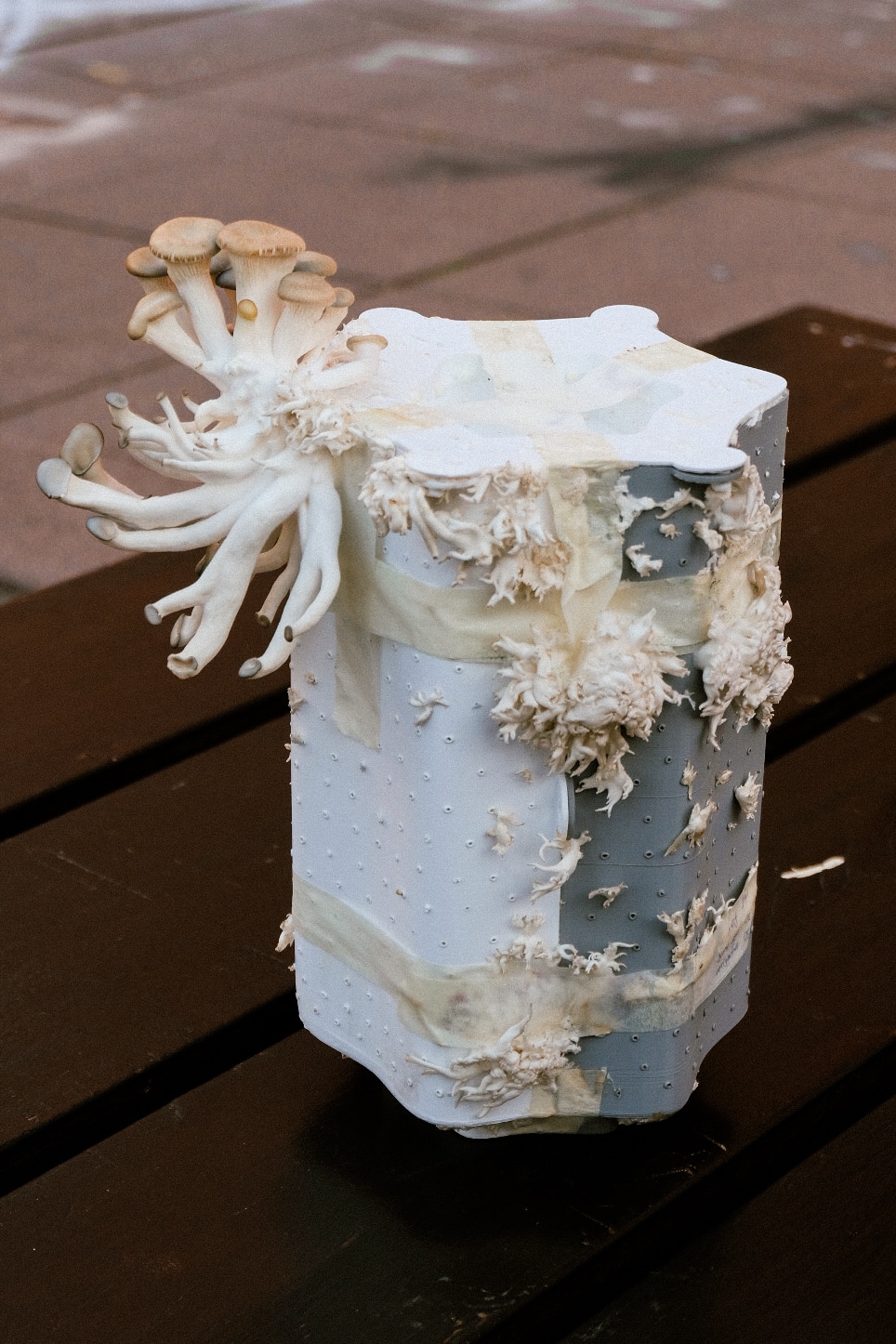
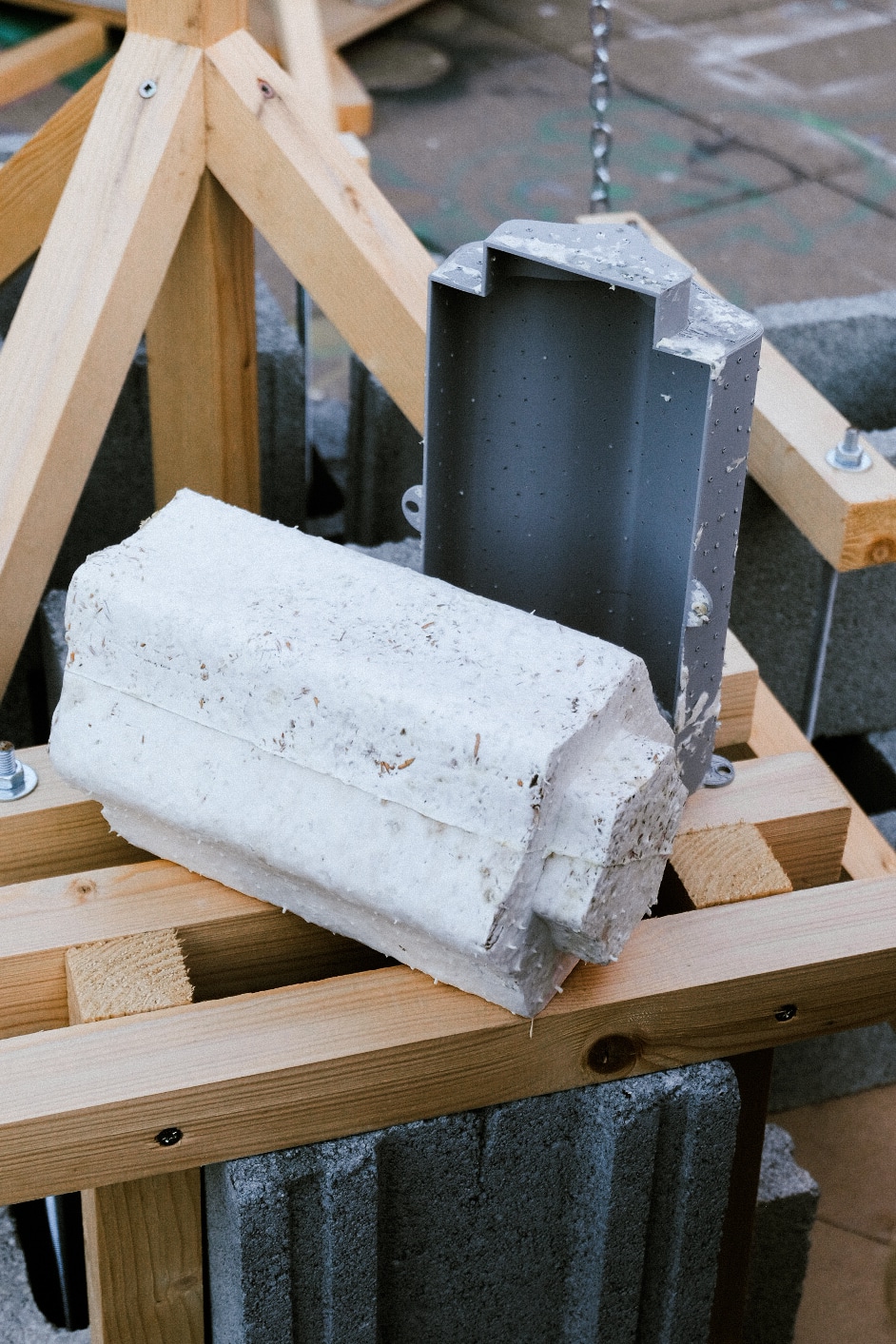
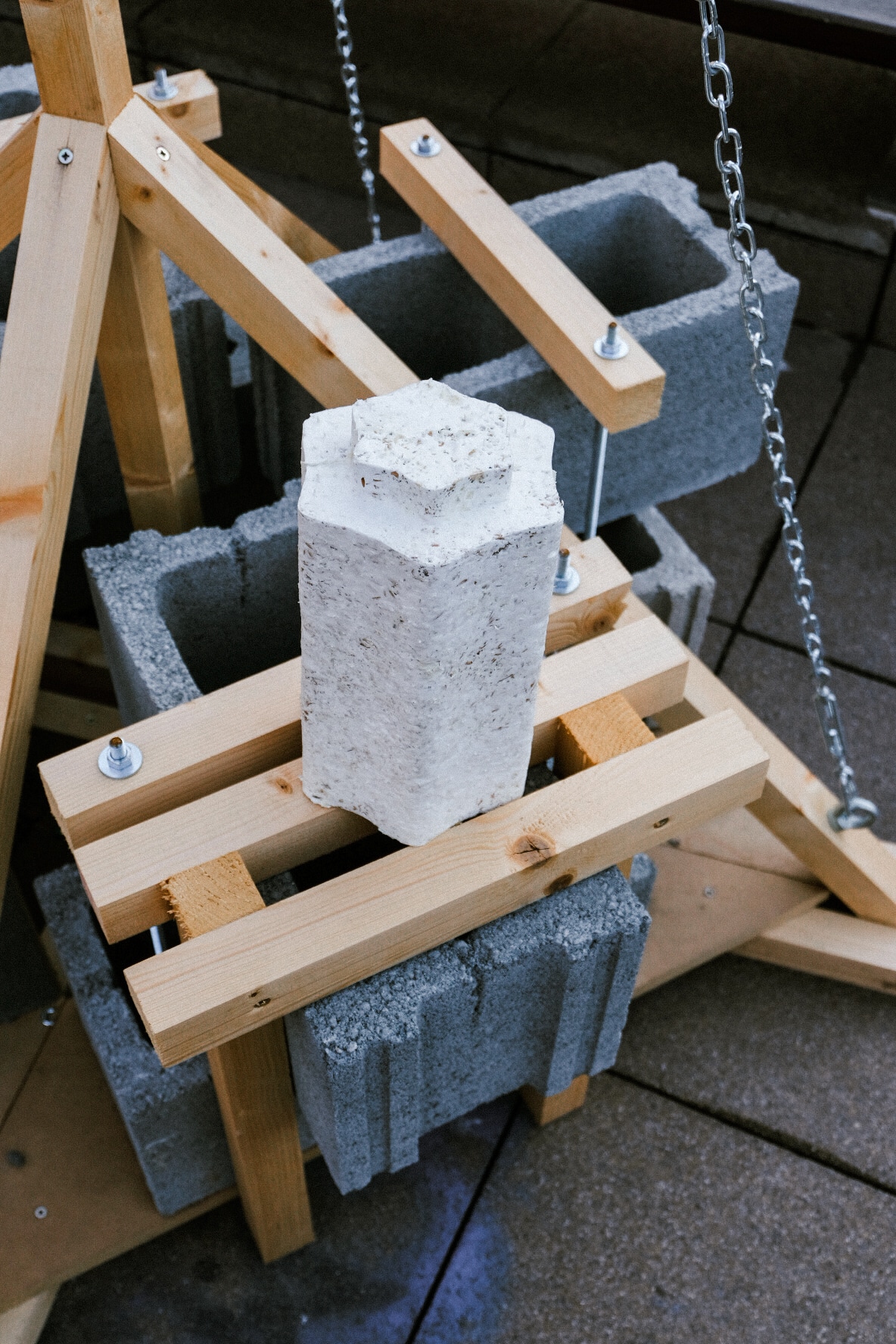
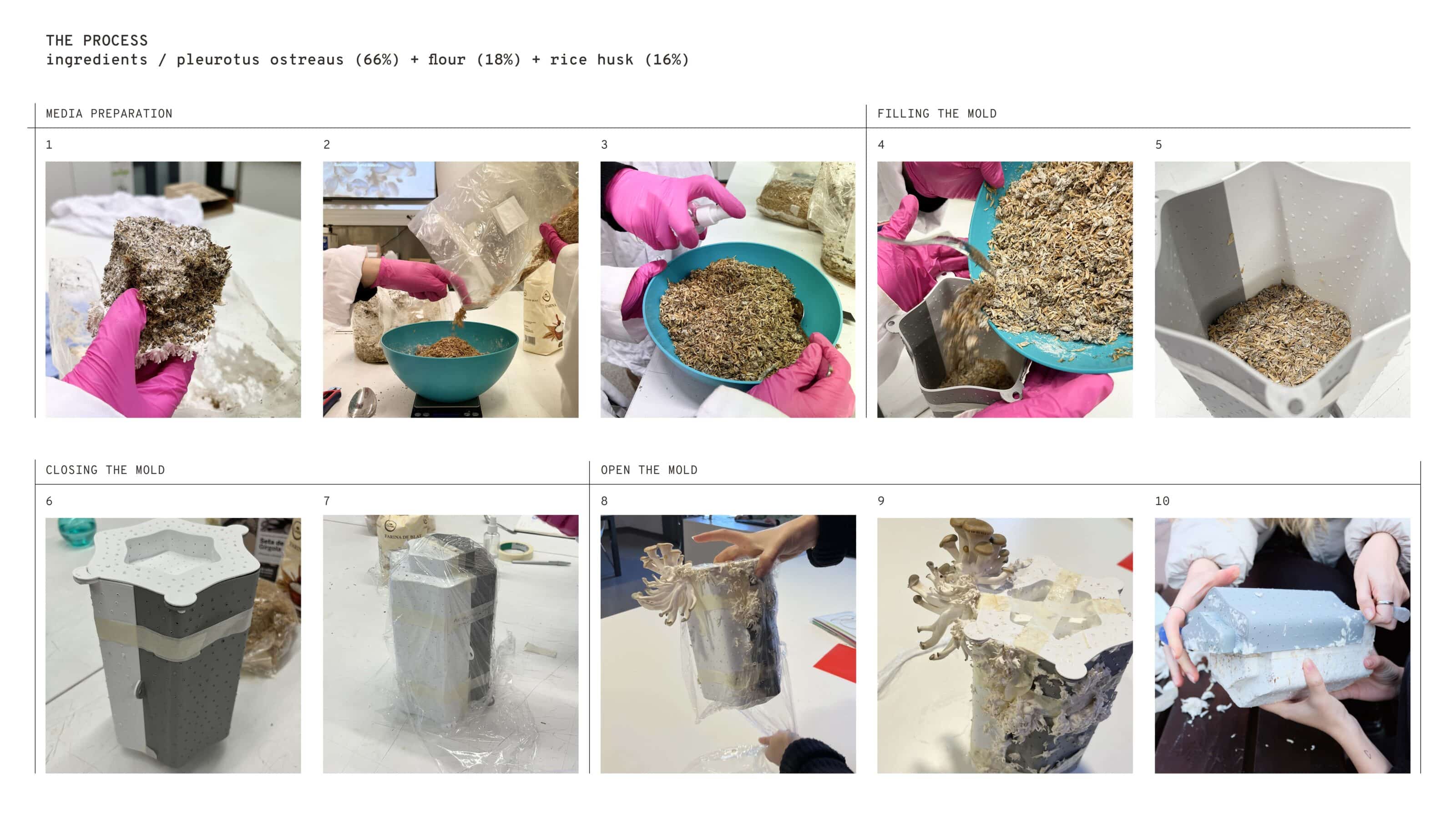
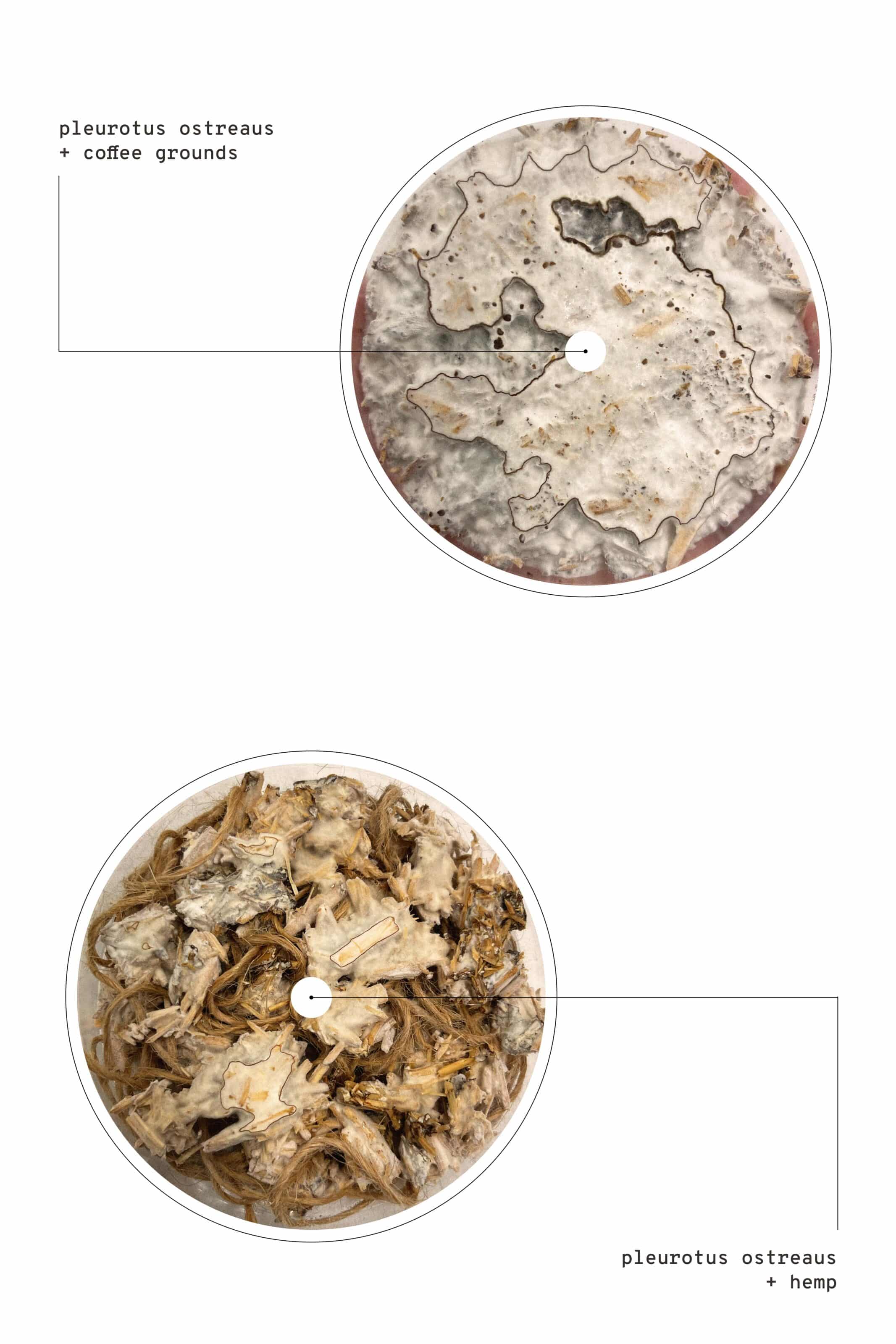
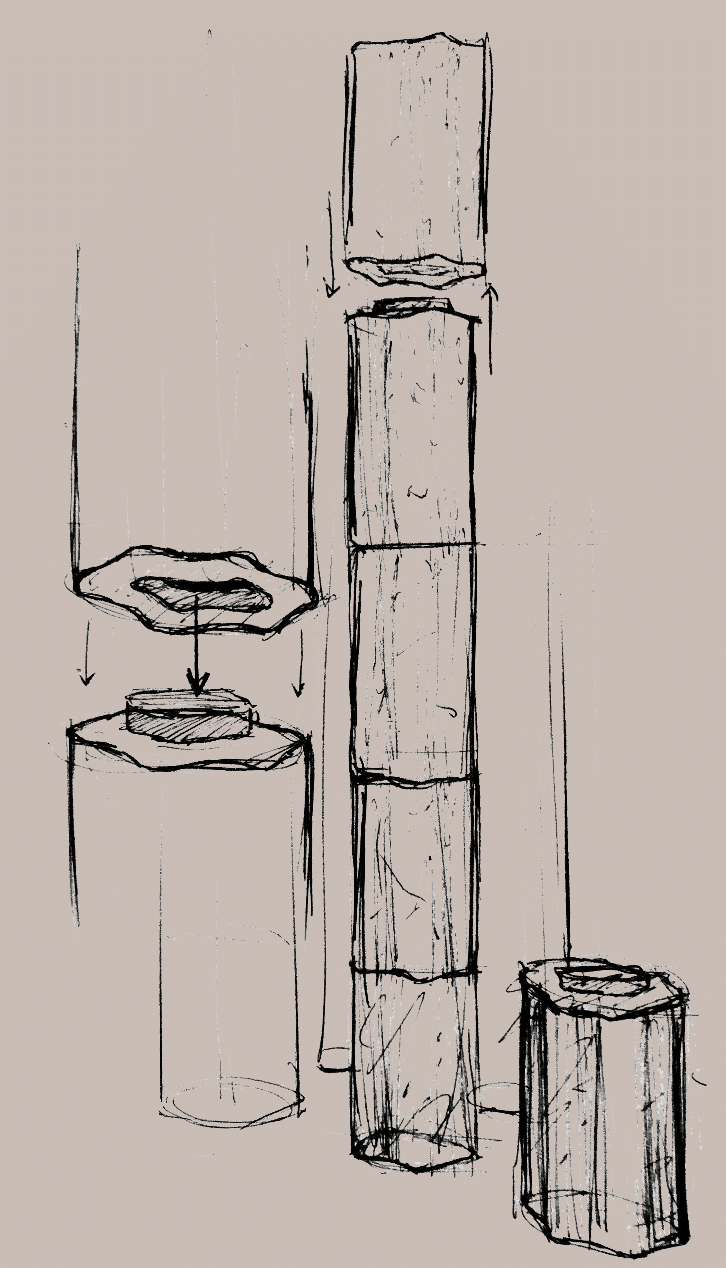

To enable scalable, interlocking assemblies, the bricks were designed with a modular shape inspired by LEGO systems. Custom PLA molds were 3D-printed with this locking geometry and filled with the substrate of mycelium, rice husk, and flour, each component playing a role in structure and growth.
The mixture was hydrated and packed into molds, then incubated under controlled indoor conditions for about two weeks. During this time, the mycelium colonized the form, producing cohesive structures that retained fine surface textures and remained stable after drying.
The resulting bricks are lightweight, strong, and fully compostable. By merging natural growth with digital fabrication, MycoBricks offers a vision of architecture that doesn’t just build, but grows, proposing a regenerative alternative to conventional materials.
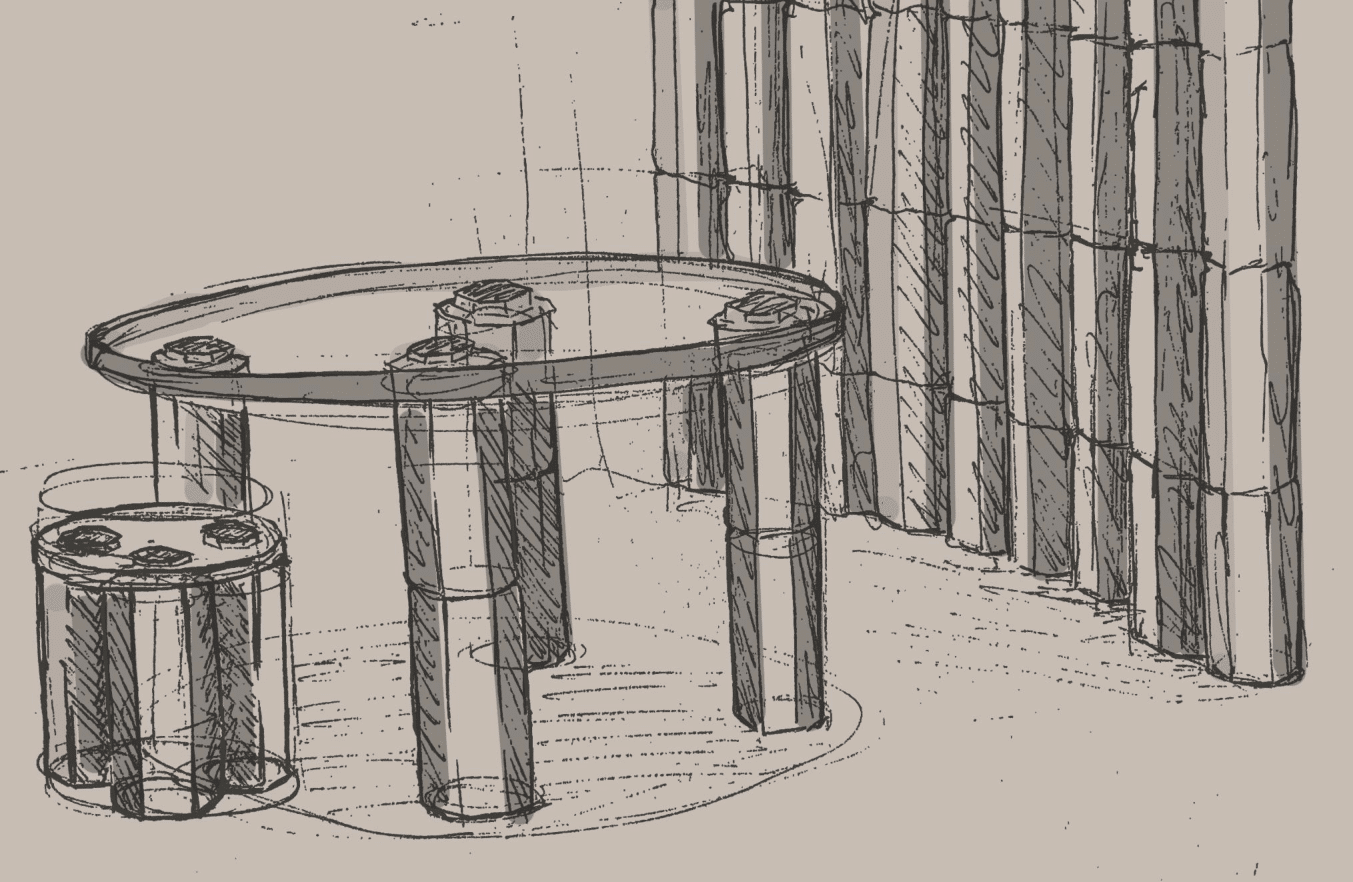
The project is currently in a testing phase to validate the actual potential of these materials. Next steps include identifying the optimal component ratios to maximize performance and meet structural requirements, followed by the development of final product prototypes, such as tables, columns, or experimental variations in scale and interlocking systems.


